Sunday, March 11, 2007

David Lynch: hideously weird...


"A woman in trouble" (tagline to Inland Empire)

When I watch a David Lynch film it always sends me into a semi-hypnotic state combined with that whacked out hallucinatory head trippy feeling. I like David Lynch and have done so since I watched that disturbing oddity Blue Velvet back in 1988.

It is of consequence that the two favourite painters of this cult indie film director are Francis Bacon and Edward Hopper . Hopper with his cityscapes and landscapes that smack of utter loneliness’ and alienation. People in his paintings never seem to connect or show any physical closeness. Lynch creates Hopperesque townsvilles that reflect a kind of edgy normality but dig deeper and you will see the influence of Bacon with the seedy underbelly of life which represents distress, violence, raw anger, and emotion. Towards the end of Inland Empire there is a scene strongly reminiscent of Bacon’s Head.

Inland Empire, rather like Lynch’s previous film Mulholland Drive, has the Hollywood theme throughout. Hollywood, the place where “stars make dreams and dreams make stars. Or conversely where dreams are tarnished and destroyed. Where the character played by Laura Dern is seen staggering along Hollywood Walk of Fame puking up blood after being stabbed.

The story revolves around an actress played by Laura Dern (a Lynch favourite) who is visited in her gloomy and creepy Louis XIV house by a “neighbour” (Grace Zabriskie… another Lynch favourite who played Laura Palmer’s mum in Twin Peaks). The scene is unnerving as the camera close-ups lingers on the expressive faces. The neighbour tells Nikki that she will land a part based on a Polish story, an old tale “about marriage” that will end in a “brutal fucking murder” and that if “tomorrow is today you will be sitting over there”…...

If you are looking for linear narrative then you will be disappointed as Lynch creates his films out of ideas. A kind of stream of consciousness with visual flair. Nikki the actress gets a part in a film where she finds out it was made before by a Polish film company but something dreadful happened to the leads. The viewer is pushed head first rather like Alice in Wonderland down into the trippy labryrinth of the story. Nikki the actress becomes Susan Blue (the character she plays in the film).

Another device of Lynch is changing identities or to be technical, photogenic fugue. It is a familiar device as Lynch used it in Mulholland Drive and Lost Highway. Is Nikki really Susan or is Susan really Nikki? Is this a film within a film? Who are the women who appear with Susan/Nikki and lip synch and dance along to the song “Locomotion”?

There is also parallel story about the two Polish leads in the original doomed production. What is real and not real? The Lynchian devices are apparent such as eerie low level noise/music, demons, time travel, low level orange/red lighting, warnings of eminent danger, blood red curtains, theatres, endless doors with Axx nn written on them (incidentally Axxon N. was a murder mystery story which never got off the ground for Lynch), time portals, fuzzy and disjointed camera shots. The only difference I found is that Lynch uses close-ups much more.

The film is a little under 3 hours but hey, I forgive Lynch as I was rooted to the chair. It absolutely makes no plot sense and I have given up trying to understand the meaning of Lynch. I just go with the flow. I remember spending days trying to figure out Mulholland Drive. That is what I like about Lynch there is no beginning, middle or end and no straightforward story. You can see the influences Lynch has on, whether consciously or not, other writers and directors (The film Donnie Darko and telly drama Desperate Housewives are just two examples… well, even more so since Lynch favourite Kyle “Agent Cooper” MacLachlan joined Desperate Housewives..)

Rather like Inland Empire, you never truly get it but it is 3 hours of spectacular Lynchian invention with no denouement except more weird and whacky dance routines at the end.

I don’t have a clue at what the rabbits set in a 1950s telly “comedy” (including canned laughter) represent…….

Friday, March 09, 2007

More on the intellectual laziness of the RCP


In a rather mendacious article, Spiked editor Brendan O’Neill, has defended Martin Durkin, the producer of “The Great global Warming Swindle”, including an attack on the criticism I wrote on this blog.

O’Neill’s argument is essentially that:
i) it is irrelevant that Durkin has no background in science as neither do most of his critics
ii) criticisms of Channel 4 for showing the film are about enforcing ideological conformity – and there is no questioning of the “orthodoxy” of global warming in the mainstream media.
iii) exposing Durkin’s links to the underground RCP is a form of red baiting
iv) environmentalism promotes poverty in the developing world

Ok. So what is my personal standing to comment on this. I have a first class degree in engineering, and an MSc from Oxford University. I am a chartered engineer. I worked for 8 years in the environmental monitoring instrumentation sector, and I have published peer reviewed technical papers on the reliability and provenance of data used in assessing air quality. I have also studied the philosophy of science as I have a keen interest in the process by which we judge the truth-likeness of scientific theories. In short, while Brendan o’Neill singles out Guardian TV reviewer Zoë Williams as a “ditzy la-la columnist”, I am a professional with a background in this specific field. Not particularly eminent perhaps, but not ill-informed either.

It is probably also worth mentiooning that I used to be a climate change sceptic myself, but have become utterly convinced by the wieght of evidence and scientific debate, which I have followed as a professional.

Durkin’s lack of a scientific background is only relevant because he adopts an approach to scientific debate which is outwith the established practice of working scientists, and contrary to a philosophically defensible method of judging whether theories are sound or not. Implicit in Durkin’s approach is that theories are accepted as approximating truth likeness when they achieve consensus.

Working scientists adopt a much more sophisticated approach, and theories become established not only because they provide the best explanation of the evidence, but also when they are theoretically virtuous in the sense of their inherent consistency and that they tie in with other established theories. Over the last few years the theory that human agency causes increase in CO2 levels that is in turn causing global warming has become a mature and establish theory because of its persuasive power plus its consistency with the rest of our scientific understanding; and it is overwhelmingly accepted as correct by professional scientists.

Most theories are incomplete in the degree to which they provide a good approximation to underlying reality, which is revealed by inconsistencies with the evidence, or incompatibilities with other theories. This is not a problem with the scientific method, but rather a recognition of the way superior theories supersede inferior ones. Therefore we of course accept that the current theories could be superseded, but in order to establish the credibility of any alternate theories it would be necessary to establish that they resolve problems with the accepted theories, or provide a “progressive problem shift” by being more theoretically virtuous in the technical sense of also providing the solution to an unrelated issue. This is the scientific approach.

However, it is not Durkin’s approach to criticism of global warming theory, which is journalistic not scientific. His approach is to find controversialists who will say something shocking. My criticism, and the criticism of others, to Durkin is that it is bad science, being passed as good coin.

But his response reveals he is not interested in science, as quoted in Spiked:
“It is soft censorship’, Durkin insists. ‘If there is a huge response to a programme, then the ITC and now Ofcom feel the need to do something. So they end up censuring seriously controversial work. … The end result is phoney controversialism on TV but not much real controversialist. Ofcom is supposed to uphold standards but it does the opposite.’”

Durkin believes that controversy is inherently virtuous. But this is a facile and juvenile approach to the serious question of establishing what is true and what is not.

Similarly Durkin’s claim that we are seeking to produce ideological conformity is false. What we want to see is informed political debate, based upon the actually existing scientific consensus. There is plenty of argument to the contrary in the media, from the likes of Jeremy Clarkson, and the car lobby. What is distinctly wrong about Durkin is that he seeks to undermine the informed political debate by misrepresenting the balance of scientific opinion, so as to give exaggerated weight to eccentrics.

This is also why it is not “red baiting” to expose the way Durkin is linked to the secretive libertarian pressure group formerly known as the RCP. When he made the series “Against Nature”, leading RCP ideologist Frank Furudi, and other RCP members John Gillott (aka John Gibson) and Juliet Tizzard, were passed off as “independent experts”. The passing off of RCP members as “experts” in a self referencing world of front orgsniations is part of the RCP’s modern method, as exposed by GM watch.

Brendan O’Neill says: “In fact, a few people who contributed articles to LM appeared as talking heads on Against Nature. That’s all. Not as exciting as the crazed and wide-eyed web conspiracy theories make it sound, I know. Sorry. Durkin laughs about the fact that many environmentalists fancy themselves as leftists, yet ‘they are always exposing me…as a leftist!’ ”
But in what is ostensibly a science programme is it not wholly unrepresentative for there to be several members of the RCP presented as experts, who are not in fact experts in this field.

Again, we have the problem that Durkin does not have a scientific approach, and here more specifically he has a Lysenkoist approach that objective reality must conform to ideology.
There would be no conspiracy if the people involved were genuinely scientists working in the field who also happened to be members of the RCP, but the opposite was the case, they were only there because they were members of the RCP.

Those of us on the left are not exposing Durkin for being a “leftist”, but pointing out that he is being apparently dishonest and manipulative in promoting the peculiar libertarian and laissez faire views of the RCP/LM under false colours.

There is also genuine and legitimate concern about what the agenda of the former RCP members is now with their bewildering array of front organisations, and the effort they are making to influence science policy in the direction of deregulation. The only element of “exposure” is that there clearly is a shadowy hidden agenda, and it is correct to bring that fact into the light of day.
Finally, Brendon o’Neill argues that environmentalism is condemning the developing world to poverty. “Many of the talking heads argued that our obsession with restraining development in order to ‘save the planet’ will consign the world’s poorest to a life of grime and squalor.” Firstly this displays an ignorance of the actual dynamic of capitalism which is technology neutral – economic growth can still be sustained on less carbon based technologies, but secondly it is not the expense of sustainable power generation that is inhibiting the growth of the developing world, but rather the changes in world capitalism that have subordinated developing nations into the role of raw material providers.

Sustainability does not mean an acceptance of poverty, nor does it mean a halt to economic development, but it means asserting conscious human control over the economic processes so that our industrial and agricultural activity serves humanity rather than destroying it. It means defining “development” not as economic growth for its own sake, but as focussing economic activity on improving our lives and environment.

Again there is a feeling that Brendon o’Neill has not moved beyond the juvenilia of Marinetti and the Futurists: “We will sing of the great crowds agitated by work, pleasure and revolt; the multi-colored and polyphonic surf of revolutions in modern capitals: the nocturnal vibration of the arsenals and the workshops beneath their violent electric moons: the gluttonous railway stations devouring smoking serpents; factories suspended from the clouds by the thread of their smoke; bridges with the leap of gymnasts flung across the diabolic cutlery of sunny rivers: adventurous steamers sniffing the horizon; great-breasted locomotives, puffing on the rails like enormous steel horses with long tubes for bridle, and the gliding flight of aeroplanes whose propeller sounds like the flapping of a flag and the applause of enthusiastic crowds.”

What I find distasteful and repugnant about the RCP in their new guises is the elitist contempt by which they operate as a post-modern freemasonry, peddling their self serving but shallow commentary and controversialism. These are people who have never really gone beyond not tidying their bedroom as a from of teenage rebellion.

Socialist Alliance - where is the money?

...


The motion passed by the final conference of the Socialist Alliance on 5th February 2005 decided that all the funds would be disposed of and the bank account closed before 31st March 2005, and decided that the funds would be split equally before 28th February between the following organisations: Alliance for Workers Liberty, Communist Party of Great Britain, International Socialist Group, Socialist Alliance Democracy Platform, Socialist Solidarity Network, Socialist Workers Party, Socialist Unity Network.

It may come as a surprise therefore that the bank account was still open in January 2007 and had around £2500 in it. What is more, rather than dispose of these funds according to the democratic decision of the members there has been apparent agreement between former officers of the SA to thwart the decision of the members and pay these funds instead to the low profile organisation, the Campaign to Defend Asylum Seekers.

This is a difficult issue to deal with, but I feel it is in the interests of the left for there to be a public discussion of how the Socialist Allaince was administered and closed, as it has a bearing on the political practices of some of the left organisations involved, and we need to understand this context for future left regroupment projects to prosper. I will return to this history in later posts on this blog.

E-mail correspondence started in January this year between comrades Rob Hoverman, (the national Secretary), Heather Cox (the treasurer), another comrade who was not an office holder at the time the closure motion was passed, and Jim Jepps, a member of the national executive.

All the comrades except Jim Jepps agreed to pay the money to CDAS, at the suggestion of the comrade who was not an office holder, and not on the national executive. Jim pointed out that this decision was contrary to the legally binding decision of conference, and absolutely properly forwarded the correspondence to other members of the national executive. Both Rob and the non-office holding comrade responded to Jim’s argument (that there was a legal and moral obligation to respect the decision of the members) with terse one line e-mails saying they still thought the money should be paid to CDAS.

I then wrote to all the comrades involved in this exchange, in the following terms (these are extracts from a longer mail):

Constitutionally there is only one LAWFUL outcome, which is to dispense the remaining monies as decided by the Emergency General meeting which closed down the SA. Which is to split it between the left groups named in the closing motion.

There is no lawful basis for even 20p going to CDAS - however worthy that cause might be. This was not agreed at the EGM, and therefore any subsequent decision by exec members was and is ultra vires. I have no recollection of any decision being made to pay anything to CDAS -( indeed I have never heard of the organisation)

It is not at alll clear whether an e-mail consultation involving even the full exec may be considered a meeting of the exec competent to take decision within the constitution.

An ad hoc exchange between only a few members certainly has no constitutional standing within the SA.


…

Let us be clear, that we are only in this mess becasue the national chair and secretary of the SA failed to carry out the express mandate of the closing EGM, which decided specifically that there would be an immediate meeting of the exec convened (which Nick [the chair] never organised), and that the closing balances would be dispersed and the account colsed within one month of the final EGM. (responsibility for which lay with the national secretary)

Had the bank account been closed within weeks as originally intended then no substantial sum of monies would have accrued. Having failed to close the account (for over two years!) in knowledge that substantial standing orders would continue to be paid into it, then if a decision is made to pay those monies to anyone other than the lawful owners as decided by the EGM, [this would be wrong]

....

As such, I would recommend that of you want to pay the monies to CDAS, then you first seek independant professional legal opinion as to the standing of that decision, and share that opinion with alll the exec members, including those not on e-mail. As we would be collectively responsible.

...

I may of course be wrong about the legality of a decision to pay the money to CDAS - which is why i recommend we take legal advice before embarking on that course of action.

Alternatively, why not split the monies as we are legally obliged to, and issue a recommendation that monies could be paid to CDAS.

Although I sent this e-mail to the correct e-mail addresses, that Rob and Heather had been using, neither of them have had the courtesy to reply, and we currently have no idea whether the funds have been disposed of improperly.

It is because the office holders apparently consider themselves unaccountable to the national executive, and apparently not willing to honour the decision of the membership, that I feel I have no alternative other than to make this issue public. I have the support of several other former members of the SA national executive in taking this course of action.

I trust that the office holders will now respond to me and other members of the former national executive accounting for what has happened to the monies and confirming that the decision of the membership will be honoured.

The exact words of the motion passed by conference were (extract only):

The Socialist Alliance's remaining funds should be used to pay off debts and the bank account closed. Any remaining funds should be distributed between supporting organisations of the Socialist Alliance. This is a reflection that there is no consensus over which "organisation or organisations [have] aims consistent with those of the Socialist Alliance." Distributing the funds between the supporting organisations of the Socialist Alliance will allow the assets to be disposed of broadly proportionate to the views of the Socialist Alliance membership.The supporting organisations of the Socialist Alliance are: Alliance for Workers Liberty, Communist Party of Great Britain, International Socialist Group, Socialist Alliance Democracy Platform, Socialist Solidarity Network, Socialist Workers Party, Socialist Unity Network. Any remaining funds should be distributed equally between these seven organisations. This conference notes that the share of the funds for any organisation who supports Respect the Unity Coalition may at the discretion of that organisation be paid directly to Respect instead.The Socialist Alliance national executive elected at annual conference in 2003 will continue in office until the debts are paid off and remaining funds distributed, which must take place no later that 28th February 2005, at which point the Socialist Alliance ceases to exist. The national executive should meet immediately after this conference closes to elect a sub-committee to carry out the winding up of the Socialist Alliance.A final treasurer's report will be prepared, audited and published on the web-site www.socialistalliance.org. This will be posted no later than 31st March 2005. A printed version will be available to any member or former member who requests one before that date by sending an e-mail to socialistalliance2000@yahoo.co.uk.

Thursday, March 08, 2007

Babel

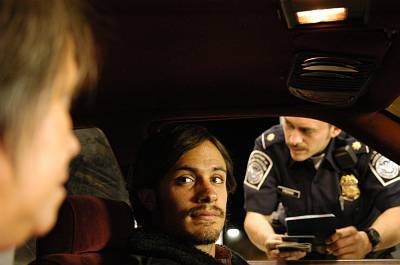
Last night I went to see Babel, the Oscar winning Mexican and American film directed by Alejandro González Iñárritu.

It really is an extraordinary movie, combining artistic integrity, a gripping plot and thought provoking political content. The high quality of the result is the effective combination of these elements.

The film uses the interrelated stories of four families, from Japan, Morocco, the USA and Mexico, who are all impacted by a tragic shooting. Attention shifts from one story to the next: what works really effectively here is that, for example, the Japanese story deals with grief, so by the time the other stories reach dramatic conclusions with death and danger, we are already emotionally conditioned to be deeply moved, which jolts you out of the complacency that we usually feel about screen violence.

There is also a strong exploration of the relationship between the developed world and the developing world. The vibrancy and vitality of Mexican culture is counterposed to middle class American suburbia, but then the economic and power imbalance is forcefully brought home at the border. This is all nicely understated, as with the genuinely traumatic identification we have with the cute white children lost in the desert, but then casually a US border policeman asks the Mexican nanny if she has any idea how many Mexican children die making the crossing. The cultural and economic gulf is further brought home because the only two occasions where the timeline differences between the stories becomes explicit also bridge between the two worlds.

The story is occasionally melodramatic, and occasionally seems derivative, but the acting performances are universally excellent, and overcomes any objections. Rinko Kikuchi’s portrayal as a deaf mute girl dealing with grief is utterly convincing, and had some resonance for me with Julliette Binoche’s role in “Three Colours, Blue”, but with the added brilliance of how Rinko shows the vulnerability, insecurity and also joy of being a teenager.

Gustavo Santaolalla won an Oscar for the musical score, which is completely deserved. The music effectively underpins the emotional intensity, and there are some brilliant set pieces, such as Rinko's drug expereince.

Anyway, it is a great film. See it of you can.

House of Lords abolished, so what?

...

The decision by the House of Commons to move to an entirely elected second chamber is effectively a move to abolish the House of Lords and replace it with something else.

Abolition of the Lords used to be mainstream Labour policy, although never enacted, and has long been one of the key demands of the Labour left, so why do I feel so unenthusiastic about it? Is it because Labour have finally acted becasue the issue has now become meaningless?

When the Lords was largely hereditary there was a massive built in majority for the Conservatives, and for example during the 1975 to 1976 session of Parliament, the Labour government suffered a huge 126 defeats in the Lords. Any radical or reforming agenda by Labour would expect entrenched opposition from chinless wonders who had a right to block legislation just because their great great great grandmother shagged Charles II, or some equally important service to the crown.

But the last hurrah of the Hereditary peers as a political force was blocking the repeal of the homophobic Section 28 of the Local Government Act in 2000. By the time the Labour Party sucessfully reintroduced the repeal in 2003 the House of Lords had seen the back of most of the hereditaries as the House of Lords Act 1999 had come into force.

I obviously support the extension of the principle of extending elections to the second chamber. But the context has utterly changed.

Firstly, the Labour Party has so utterly changed and now stands for neo-liberal economic policies combined with the concept of an authoritarian and intrusive state role to enforce and police social conformity. The idea that the House of Lords would impede progressive legislation from Labour designed to provide an irreversible shift in wealth and power to working people and their families is laughable as Labour’s economic policy wouldnowadays sit happily with the Tories or the US Republicans. However if we are truthful with ourselves the House of Lords has actually provided a progressive constraint in recent years against the tendency of New Labour to restrict civil liberties. For example, opposition to anti-working class policies such as ID cards, detention without trial, or the war in Iraq has not come from our two elected Labour MPs in the town where I live, but from the unelected Lord Stoddart of Swindon.

Secondly, the most important change of context is that the greater threat to the authority of the House of Commons is not the unelected House of Lords, but the unelected army of special advisors, spin doctors, policy enforcers that New Labour has made a seemingly permanent feature of our political system.

New Labour has sought to become a self-perpetuating governing elite, and democracy within the Labour Party has been hollowed out to ensure that only careerists, Yes-men and Yes-women, and numpties have any chance of being selected for elected office. The Party conference has been transformed into an almost meaningless rally, resistant to influence from the grass roots or the unions. New Labour would rather derive its domestic policy from focus groups and the Daily Mail than from a democratic process involving it membership, and derives its foreign policy from the Whitehouse.

The biggest impediment to radical social change is not the unelected House of Lords, but the utter lack of a party of organised labour, while we have the space occupied by a party that is Labour in name only.

Wednesday, March 07, 2007

The great RCP swindle

UPDATE: Brendan O’Neill, has criticised this post in Spiked, I reply to him here.

UPDATE - to complain AFTER the programme has been transmitted, you should send the complaints to OFCOM here. Please do complain, and please do publicise this link and ask others to complain.

I was going to write something about the film Channel 4 are showing on Thursday called “The Great Climate Warming Swindle”, because this is made by Martin Durkin, who was behind the critically and scientifically mauled series “Against Nature”, also shown on Channel 4. Not only is Durkin's point of view totally unrepresentative of any serious scientific opinion, but his previous programmes have been manipulative, and distorted the views of eminent scientists.

You can complain to Channel 4 by filling in this form, it is well worth doing so if they get a number of complaints then they will find it harder to commission future programmes from Durkin.

When I started to write I found that the topic had already been covered brilliantly over at the Irish blog, Cedar Lounge. So I will just quote from them!

In particular Cedar Lounge highlights the link with the secret British libertarian sect, the Revolutionary Communist Party (RCP). The story has also been picked up by Green blogger, Paul Kingsnorth, who amusingly imagines what the Channel 4 commissioning meeting was like.

As Cedar Lounge reports:

“Martin Durkin has quite a track record in this kind of programme. George Monbiot writes about him here, pointing to his some of his previous output including a report on how silicone implants reduce the risk of breast cancer (initially proposed to the BBC’s Horizon but dropped when the commissioned researcher contradicted the claims, then shown by Channel 4), a series (again for Channel 4) called Against Nature, which essentially argued that environmentalists were proto-Nazis out to control the world (which misrepresented the views of many of those interviewed, for which Channel 4 was forced to apologise) and a programme (once again, Channel 4) on genetically-modified foodstuffs which one of the participants described as having “rendered great disservice to science generally and to the scientific debate on GM-food particularly“. For someone with no scientific background, one has to wonder how Martin Durkin keeps being commissioned for programmes like these. Or, as Private Eye wrote at the time “What does Channel 4 do with programme makers condemned by the TV watchdog,the Independent Television Commission (ITC), for using underhand editing techniques? The answer is, er, hire them to make another programme.”

“One intriguing element to the whole affair is the link to the Revolutionary Communist Party, also known as the Living Marxism group, also known as the Institute of Ideas, also known as Spiked Online, also known as Sense About Science. Phew! It’s hard to keep up, even for an ex-DL member, so for an introduction to the bizarre and murky world of this sect which went so far left it came out the other side, check out George Monbiot’s pieces and ‘The Revolution has been Televised‘ and ‘Invasion of the Entryists‘, as well as Nick Cohen’s ‘The rebels who changd their tune to be pundits‘. All of these pieces highlight the role played by RCP members and friends in Durkin’s films and, while it isn’t claimed that Durkin is a member of the RCP, an article on the group by What Next states that “The day after (a piece on Against Nature appeared in The Guardian), the paper reported Martin Durkin, the Against Nature producer, saying that the RCP had been dissolved a year previously. Not known as an RCP member or supporter, it’s not clear how he was privy to such information”.

“It’s hard to do justice to the sheer strangeness of the ideology behind this group in its various guises. Essentially, it presents an uber-libertarian view of the world, where everything suggestive of state intervention in private lives, or which might limit scientific exploration or experimentation to any degree is charged with being ‘politically-correct’ or totalitarian, part of a creeping statism which aims to control the actions of everyone on the planet. Whatever you’re for, these professional controversialists will be against it.”

The most worrying thing for me is how the now underground RCP have managed to insinuate themselves into the establishment scientific debates, promoting an entirely ideologically driven agenda overriding the scientific evidence, like modern day Lysenkoists. There is an expose of their methods on the GM watch site. They have even received funds from the ESPRC government research funding body, and RCP idealogist Frank Furedi, allegedly advertised for funding from supermarkets so that he could promote Genetically Modified products to their customers!

As I have argued before, there is a warning for the left here. We must of course accept that our current scientific understanding is incomplete and only an approximation to truth-likeness, but we must also have a philosophical acceptance that the actually existing physical world has its dynamic independent of our understanding of it. We must not impose our ideologiocal preferences onto what truth we will and will not accept. The RCP, as modern day Lysenkoists, are the worst culprits, however I have met comrades from many traditions who for example rule out a priori any evidence of genetic infleunce on human behaviour - whereas while socialists are correctly predisposed towards social explanations we can accept that both biological and social factors are at play - let's see what the evidence tells us.

Carnival of Socialism


The Socialist Unity Blog is hosting the next Carnival of Socialism.

The idea behind the Carnival of Socialism is to highlight, encourage and promote the best in left blogging. Each Carnival is hosted by a different blog, and other bloggers are invited to submit links to postings on the chosen topic

As such it should, in my opinion, reflect the full diversity of views on the left. I had been rather critical of the last couple of Carnivals because I felt the bloggers who hosted them focussed the carnival too much towards their own point of view.

As always it is a mistake to criticise, because quite justifiably the comrades have said to us at SU blog, if you think it could be done better, then you do the next one. So we have set ourselves up! Hopefully it won't be a case of Pride before a Fall!

Anyway, we are inviting submissions before a deadline of Saturday 8th April, and hope to publish on Monday 10th April. But the earlier you send a submission the better.

The topic we have chosen is “Learning from the past”. This can include topics of how the left can learn from the experience of previous historical periods, either recently or a long time ago, or the history of various left groups, or how ideas have evolved. It can also include topics about how we as individual socialists have learned from our own personal experience.

Please submit items for consideration to swindon_socialists@yahoo.co.uk.

When writing to me, please put the word “Carnival” in the subject line.

Also in your e-mail please don’t mention Viagra, penis enlargement, offers to get money out of Nigeria, or improbable sexual favours, as these mails get blocked by my spam filter.

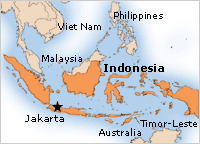
Repression in Indonesia


I have been sent the following by Katarina Pujiastuti, Head international Relation for the Indonesian party, PAPERNAS

The list of repression – a dark face of Indonesian democracy
The tension fill the air, where hundreds people who called them self as Anti-communist Forum surrounded the venue of Regional conference on March 3, 2007 in East Java . They did not only carry sharp knifes but also burnt PAPERNAS’ flag and banners along the road of the venue.

Although they forced to stop, the conference but the participants determined to continue the conference. They In the afternoon they breaking the window glass and tried to burst into the venue, but this situation was able to be anticipated by the Papernas’ security team. “We have followed the formal procedure, it is our democratic rights to have the congress, and this rights is worth to fighting for” said Fajar, the elected chairperson of Each Java Branch.

Papernas Has went through various repression, ironically this repression were happening in front of the chief of regional police and their troops. Police did not take any action to arrest the group who clearly violate the law.

On 17 September 2006 in East Java , a group of People who called themselves as Tauhid anti-communist movement” (GERTAK) armed with sharp weapon tried to halt the Declaration of The Preparatory committee of The National Liberation Party of Unity. Yet, it was able to be anticipated by the Participants.

On 18-21 January hundreds of People who called themselves as FAKI (Indonesian Anti-Communist Front (FAKI) carry sharp knives aim to stop Papernas Congress

On March 3 2007, Police refused to release permit to Regional conference of PAPERNAS Jogjakarta. Po lice assumed there will any threat in responding this conference, so the police do not want to bother with this security matters.

The repressions reveal the undemocratic and repressive character of the State and its apparatus. All this repression tells us that in the country People’s Democracy do not available for the people, it is need to be fighting for. People need to take the rights back.

The National Liberation Party of Unity (PAPERNAS) is a party that unifies democratic organization to bring three program to free from foreign domination: Nationalization mining industry, the repudiation of Foreign debt and National Industrialization Program.

*********************************************************************
PAPERNAS ask National police to arrest FAKI Leader.

Jakarta – around 30 members of Central Leadership committee of The National Liberation Party of Unity came to Police headquarter and urged general Sutanto to arrest FAKI leader.

However, Sutanto refused to meet PAPERNAS committees and put this burden to his Public relation, Bambang K. He did not show any indication to do immediate action to investigate this case. He even ask Papernas to submit the a complete written report about repression to the regional police, who was also there and did nothing during the conference.

Dominggus Oktavianus , chair of Politics and Democracy of Papernas stated that As the state Apparatus, Police must use their authority to arrest them, they has been proven to do criminal action. He also asked That national police chief General Sutanto to dismiss Batu City municipal police chief AKBP Bambang Priyo Handoko from his post for failing to provide protection and security to a event that was legitimate under the law, meaning that the municipal police have violated Law Number 2/2002 on the Indonesian National Police Force.

Dominggus Emphasized police institution must upholding the law and guarantee and protect citizen’s democratic rights. “We will instigate legal proceedings against FAKI and responsible authority “

Tuesday, March 06, 2007

New Independent Left Alliance leak


Comrades

I wish to apologise for publishing what I believed to be a press release from the Independent Irish left, whereas it was in fact a draft document in circulation that had not been agreed by all the parties involved.

This document had been sent to me in good faith by an Irish trade unionist who also believed it was a press release. I understand that he has made his identity known to the Independent Irish Left, however in the journalistic tradition of protecting my sources I cannot comment further on that aspect of this issue.

I understand that the statement I published included details of some individuals who may not yet have formally agreed to sign up to the Independent Irish left, and therefore the premature publication may cause some embarassment and even comromise the project. That was certainly never my intenion, which had been quite the opposite to publicise what I regard as good practice on the left of working together.

Regretably, my action in taking the statement down may be too late, because it has now been reproduced on Indymedia Ireland. However I hope that not too much mischief will be made.

Finally thank you to the Irish comrades who promptly brought the error to my attention, and I am pleased that they have started from the correct assumption that I was acting in good faith.

I wish the Independent Left Alliance, and all socialists in Ireland the greatest success.

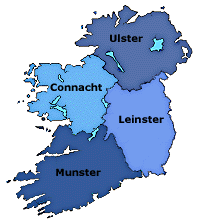
The Irish war and the British left

One of the highlights of the socialist blogging world is reading the splintered sunrise, from Belfast.

This recently caused me to reflect that as the IRA ceasefire was some 13 years ago, many British socialists have spent most or all of their political life in the period since the Irish war finished. As you get older there is a bizarre foreshortening of memory, and it only seems 5 minutes ago to me! Yet the war had a huge impact on the psychology of the British left – and that has now changed.
I remember as a young lad, when I was working as a hospital porter, reading Dan Breen’s “My Fight for Irish Freedom” in the Porters’ mess-room, which had a lurid paperback cover showing a volunteer shooting a British soldier. It caused an absolute shit storm at work, with threats of physical violence, and it forced some of the other lefts to defend me, and come off the fence over Ireland. It was actually quite tough, especially in manual workplaces, to come out as a supporter of the IRA. (If you want a measure of the declining influence of the left, back in 1978 to 1980 when I worked at the Royal United in Bath, in that one workforce there were about 6 to 8 CP members, myself as a young SWPer, my mate Simon Newell who was close to the Militant (he is now a far from militant Unison regional officer), and a nurse in the Militant. This isn’t even counting the Labour lefts!)

Back in 1988 I was paper organiser for the SWP’s Bristol district, the IRA carried out a couple of very successful actions, killing some six British soldiers at Lisburn in June and eight more at Ballygawley in August. One of these – and I cannot remember which – had killed some lads from Bristol, and there had been a local news angle on the TV and in the Bristol Evening Post. The front page of Socialist Worker ran on Troops Out, and I think all of us were nervous about going on the streets with it. This local angle made it even harder than for the Enniskillin bombing the previous year, where the SW had a very good headline “The bitter fruits of British imperialism”

In those days we ran a Friday evening sale and three shifts of Saturday paper sale in Bristol, across three or four different locations and we would expect some 30 or 40 comrades to be selling. The first thing I remember is that the RCP, who had a sale near our main pitch, didn’t turn out that Saturday, presumably because their paper had a “Victory to the IRA!” headline, or similar, and they didn’t have the bottle to sell it.

Anyway, before each shift started I organised a brief caucus, and explained that we were selling on the slogan Troops Out, and that we were arguing that the blame for the deaths lay with the British occupation, and that if people wanted to see an end to the war then the British should quit Ireland. And it went well, I think we did encounter some hostility, but we also did engage with an audience who agreed with us, and we even sold some papers to serving soldiers in the Gloucesters, who were shortly off to the six counties. Although I wouldn’t exaggerate our impact, it was important that in England there was a public presence on the streets that would argue that the war-aims of the IRA were justified, and the manner in which they conducted their struggle was up to them.

Nowadays, over the issue of the war in Iraq, or opposition to hospital closures or whatever, the British left almost entirely occupies a world where they are swimming with the stream. But the Irish war was a defining issue that we couldn’t duck (unless you were in the Militant), and where we had to stand up and argue a usually very unpopular position.

It is worth digressing here to discuss the British SWP’s ambivalence about Ireland. The party always tolerated quite a wide range of opinion over the issue. (Recently over at “Richard Lenin’s Tomb” he wrote that the SWP had always supported the Mujahideen in Afghanistan, and quoted an ISJ article by Jonathan Neale from 1981 to prove it, but this misses the point that the SWP didn’t have “a line” on issues like Afghanistan. Generally although there was a lot of debate during the 1980s, the Cliff regime only came down firmly on an issue if it became a factional football, or related directly to the core differentiators of the SWP like State Cap – there were SWP members (such as myself) were more ambivelent over the Russian intervention). Over the issue of Ireland there were some – and the current national secretary Martin Smith was one – who very firmly supported the armed struggle. Other comrades were much more ambivalent about the violence, and would argue instead that we should be emphasising that the SWM in Ireland were providing a political alternative to militarism. I always tended towards the chuckie side of the argument, and I remember a public meeting in Bristol about the Birmingham Six making a contribution so fulsome in praise of the IRA that the speakers assumed I was in Sinn Fein. (Although I didn’t go as far as one Bristol comrade who always wore a safety pin on his lapel: a coded message about the split between the officials and the provos for the cogniscenti).

The armed struggle was important. As long as the IRA were at war, then every day the partition of Ireland was at the forefront of British politics, because at any time there could be a bombing or an armed action against the British Army. What is more, the message from the provisional IRA and Sinn Fein was that they rejected the existing state, and did not accept that a political solution had to be found with the existing political framework, that was a truly revolutionary position.

For the British left, support for the IRA was a sobering reality check about the political gap between ourselves and the mass of the working class. In the absence of the constant need to defend the Irish struggle, much of the British left has become quite flabby over the issue of violence, and this has contributed to a bizarre capitulation by some to the fiction of liberal democracy, as if the “democracy” we enjoy in Britain was unconnected to the oppressive violence that the British state is prepared to use around the world to promote the interests of capital.

(It is worth commenting upon the equally bizarre contortions of Sean Matgamna and the AWL, who during their entry period in the IS (later to become the SWP) they criticised the rest of the left for being too soft and not supporting thr IRA enough, and now have exacty the opposite position. indeed they used to support the Islamists fighting the Russians in Afghanistan, but now weep tears about oppression by Islamists in Iraq)

The cease fire was a recognition by the IRA that revolutionary violence was never going to force the Brits out of Ireland, however the tragedy is that they have never recognised that militarism is not the only way that the status quo can be challenged, and the acceptance of the Good Friday agreement is capitulation to the partition.

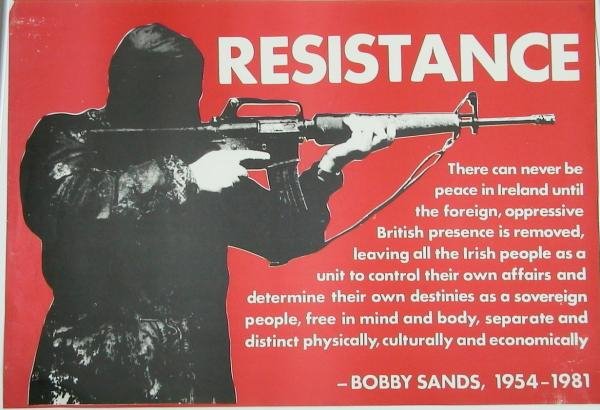
(BTW - The PIRA poster above from the 1980s is roughly translated as ""No Freedom, Until Freedom Of Women".")

Monday, March 05, 2007

Marketising misery....


“The recommendations are designed to reduce the number of the most socially disadvantaged people in the country at minimal effective cost and risk to the state”. (David Freud – ‘Reducing Dependency, Increasing Opportunity: options for the future of welfare to work’)

Once upon a time in the near future….a very possible scenario.

Ms X lost her benefit under Section 17 (Disqualification) of the Welfare Reform Act. She needed help in fighting this decision so she visited her local advice centre where she was turned away because of cut-backs. So alas, Ms X, falls through the cracks and instead of landing on a supportive safety net she falls onto hard concrete.

When the Bill goes through Parliament (possibly Spring) and also the Carter proposals accepted then this story could become a reality.

It is all under the pretence of “rights and responsibilities” and creating a “citizen based” society which will be rid of the “dependency culture” that the unholy trio of Jim Murphy, John Hutton and Gordon Brown loathe so much. But does that help Ms X? Nope....

Gee whizz, Gordon Brown, just what kind of hard faced even more class ridden society do you want to create? A society which is being sold off and asset stripped maybe…..

The Freud review was published today and strip it down to the basics includes attacks on lone parents being forced back into the workplace, greater input by private companies in providing benefits, proposals to streamline and simplify benefits.

Benefits have not risen in line with inflation and when New Labour came in power in 1997 they followed the lead of the Tories. Benefits will continue to fall in real terms. Sickness rates are down by 64,000, to its lowest over a decade. So why does the government see fit to attack the poor with this draconian and vicious Bill?

Well, it is the continuation of the marketisation of public services driven by a neo-liberal ideology (prison service, welfare benefits, legal aid and so on....) In the latest Legal Action (sub only unfortunately) there is a fascinating and informative piece by Dexter Whitfield on the marketisation of legal services (but it can be extended to the whole of the public sector).

He explains the 5 methods of Marketising services that include:


  • Commodification of services
  • Commercialising of labour - changes in terms and conditions etc.
  • Privatisation of assets,
  • Changing of language i.e. service users = consumers
  • Business interests becoming embedded in the public sector.

With the changes to welfare and the Carter Review (introduction of fixed fees and competitive tendering) we are seeing ongoing marketisation and “Tescoisation” of advice with the myth of “consumer choice”. Advice is already shrinking before our very eyes and the Carter proposals will only make things much much worse. Legal aid is a cornerstone of an equitable society as everyone has a chance of justice but with these changes it will be justice for anyone who can afford it.


“It took many years to create the legal aid system we have today. It will take only a matter of months to destroy it”.

The people who will feel the brunt of these attacks will be the poor and they will be devastating. Even writing this I am extremely angry as I have experienced the minefield of the welfare benefit system in the past as someone who has been through the mental health system and also experienced advice from various agencies. Without the support of these agencies I would have been, to put it bluntly, screwed.

Where will people be able turn to when the vile Welfare Reform Bill becomes law? Who will represent you and advocate on your behalf when your benefit is snatched away? The Bill will scare and distress many vulnerable people with the increased “conditionality” requirements. Where people will have to jump through hoops to get meagre benefits and where pressure will put on people to go back into the job market. No mention of tightening up the Disability Discrimination Act or making the job market more flexible for people or making sure there is free universal childcare available.

Oh I forget, there’s an abdication of “rights and responsibilities” from New Labour. The onus is always on the powerless.

Gordon Brown will accelerate marketisation and privatisation of public services once he is leader. And why have gutless TU leaders only shown lukewarm opposition to this Bill or the current trend in privatisation? Brown promised them the world if they keep schtum? Stupid fools. He wants to turn the clock back and snatch away NI based benefits and make it all means tested (probably including pensions).

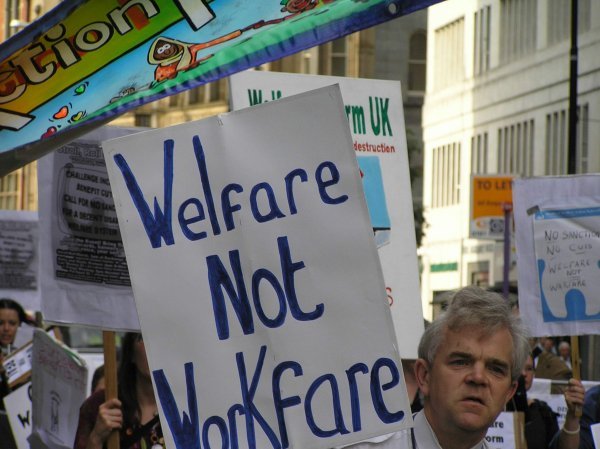
Is Brown thinking welfare state? No, he is thinking Workfare: the US system that forces people into taking the worst jobs going while giving them benefit levels of income instead of proper salaries.

Campaigns fighting against the Welfare Reform Bill include:

SWAN

CAWRB

Campaign against the Carter Review and the attacks on legal aid:

Access to Justice. There is a week of action planned in May 2007.

Correction

...

It seems that even as world weary an observer of the left as I am can be bewildered by the number of different organizations, and when I reported below that the CP was supporting the SSP for the Hollyrood elections it was an error - it is not in fact the CPB Scottish region, but the rather less significant Communist Party of Scotland who have recommended the vote for the SSP. Oh well.

Thanks to Cameron for correcting me.

URGENT SOLIDARITY REQUEST

I have just received an urgent appeal from Katarina Pujiastuti, International Relations Officer for the National Liberation Party of Unity, PAPERNAS, in Indonesia. Note that you can send a soldarity message of protest to the police by SMS from your mobile.

A regional conference of PAPERNAS in East Java is right now under attack from 100 right-wing militia claiming to belong to the Front Anti KomunisIndonesia (FAKI). The militia have forced their way into the conference venue and fighting is now taking place with the conference participants.

PAPERNAS presidential election candidate for Dita Indah Sari is at thevenue under seige now and has appealed for urgent international solidarity. FAKI is the same militia group that attacked the founding conference ofPAPERNAS in early January.PAPERNAS comrades are asking for urgent messages of protest to be faxed to the Chief of Police, General Sutanto.1. Fax your protest to East Java Police Headquarters at +622172181412.

You can also call up or send text messages to Chief Police General Sutanto at +62818315703
Urge the Indonesian police to act immediately to stop the mob attack against PAPERNAS meeting.

For further information, or sending solidarity message to comrades inPAPERNAS, please contact dpp_papernas@yahoo.com or +62 21 8305819 or+62 815 843 68608 (Katarina Pujiastuti, International Department,KP-PAPERNAS) or +6281771122 (Dita Sari)

Please pass this urgent request to any contacts you have who may helpand post to any appropriate lists you are on. Please send copies of messages of protest and solidarity messages to: dpp_papernas@yahoo.com

P.S. You can read background on PAPERNAS and the previous attacks on their right to organise here:
http://www.greenleft.org.au/2007/699/36295
http://www.greenleft.org.au/2007/696/36155
http://www.greenleft.org.au/2007/695/36139
http://www.greenleft.org.au/2007/694/36050

Boosts for SSP


Scottish Socialists gained two boosts recently.

Firstly, the Scottish executive announced that all parents on Working Tax Credit would receive free school meals for their children, this is a tremendous gain for low income families.

This action was clearly the result of the exemplary campaign led by the SSP to give free nutritious school meals to all Scottish children. Not content with merely presenting a parliamentary bill, they assembled an impressive coalition of supporters for the initiative, including trade unions, health professionals, child poverty campaigns and single parent groups. They presented a reasoned case, for example comparing the experience of Finland which used to have a health record as bad as Scotland’s , and which has turned it around with free nutritious school meals. The SSP also took to the streets with petitions, information stalls and posters to publicise the campaign. A national consultation received one of the highest responses ever for a Scottish parliamentary bill, with over 500 submissions, 97% on favour. It is this pressure which has forced the executive to act, although scandalously the bill istelf was blocked by a parliamantary committee of the main parties.

The original version of this post reported that the the Communist Party is recommending people vote for either the SNP or SSP in May’s Hollyrood elections, in the hope of achieving a pro-Independence majority. (The d’Hondt system of proportional representation used in Scotland is a gift for armchair strategists of tactical voting as you have two votes, and a vote for the SNP in the first past the post contest and the SSP in the top up list is a defensible option).

However it seems that even as world weary an observer of the left as I can be bewilderd by the number of differnt organisations, and it was not the CPB Scottish region, but the rather less significant Communist Party of Scotland who have recommended the vote for the SSP. Oh well.

The CPB SCottish region is - I beleive - one of the firmest parts of the CP in supporting a vote Labour line, but really should reconsider that situation given the support of labour for the Union with Westminster, and the prospect of rebuilding left politics around the inclusive traditions of the SSP

Friday, March 02, 2007

Left Unity at the crossroads


The two most advanced broad left projects in Europe are the PRC in Italy, and the alliance between the WASG and PDS in Germany. The last few weeks have seen parallel developments in both projects, relating to the degree to which left parties can participate in government.

I have argued before that the fundamental division in the left at the moment is not between reform and revolution, but between the class-struggle left and those who accept the given constraints of capitalism, and therefore bow to the logic of neo-liberalism. There is a parallel but not entirely the same division between those who are prepared to enter coalition governments, and those who do not.

In Italy, Senator Franco Turigliatto has been threatened with expulsion from the PRC for voting against the l’Unione Coalition’s plans to commit Italian troops to the Afghan war, and for the massive expansion of a US military base in Italy at Vicenza. His vote threw Prodi’s centre-left government into crisis, but as Turigliatto says in his open letter: “The main responsibility lies with the government itself and the policies which it adopted during all these months, and which has gradually moved away from all those who voted for it. This crisis emerged partly for obscure reasons and partly because the reformist wing of the Unione wanted to dramatise the situation, in order to force the alternative left to keep silent on the most important questions. A crisis which was used to stop any demands at all and to establish the “neoliberal” trajectory of governmental action. In that sense the debate in the Senate was blackmail, in particular on Vicenza.”

Given the overwhelming urge in Italy to get rid of the far-right buffoon Berlusconi, and his post-fascist allies, the PRC were under tremendous pressure, including from their own members to join the coalition, but to make their participation work they had to be prepare to turn to the mass movement to strengthen their hand in arguing the terms of their participation. Instead Bertinotti's leadership was been dragged to the right to accomodate to the neo-liberal Prodi.

In Germany, the merger of the WASG and PDS is gathering pace. The WASG is a significant development, with former SPD leader Oskar Lafontaine, and several trade union and social movement activists. The PDS Left Party has evolved out of the remains of the former ruling SED in the DDR, but has significantly altered since 1990, most of the careerists and bureaucrats have left, and the ideology has become more social democratic.

As Volkhard Mosler of the SWP’s sister party, Linksruck argues (in German – all the translations are my own so I apologise for any inaccuracies): ”The unification process of the two left parties in Germany, the WASG and the Left Party PDS has entered its decisive phase, and with that has shifted the focus of the debate. It is no longer a question of whether there will be a new party, but rather what the new party will look like. The future battlelines are also taking shape. Oskar Lafontane has demanded that the Left Party in Berlin should leave the coalition with the SPD, should the privatisation of the Berlin Savings bank takes place. As a result of which the leaders of the Left Party parliamentary factions in the East German state parliaments have come out on the side of their under-pressure Berlin comrades." (see below)

Lafontaine is exactly right, there is no problem with the class struggle left being prepared to enter coalition governments, and thus deprive the right wing of office, provided it uses it position in order to strengthen the real class struggle outside parliament, and is prepared to resign rather than permit anti-working class legislation. Over the imposition by the EU of bank privatisation, the PDS could use their governing role as authority to lead a militant mass movement, and i so doing they will either drag the SPD behind them or break a considerable part of the SPD's support towards them

Volkhard Mosler explains what is at stake very well, in his article “Who doesn’t fight has already lost” – There will be difficulties in bringing together the PDS and WASG, but “the conclusion cannot be “better smaller but purer” and turn back to what is commonly regarded as a purer WASG. Instead of that we should start a Western party building campaign and in the Autumn this year recruit new members with the goal of strengthening the class struggle and movement oriented wing of the new party. In addition, we must cooperate with all our strength in the organisations in the East German states, with those who don’t want to follow the vacillating course of their leadership. The pessimists claim that the struggle over the character of the new party is already lost. In reality, for the first time since the 1968-movement, socialists stand a chance of becomming a mass movement. Provised we keep our eye on the ball".

It is worth reading the following article about the PDS leadership, recently published by Linksruck:

The bankrupt Dessau Declaration
by Volkhard Mosler
(again my translation and my German isn't perfect!)

The leaders of the Left Party parliamentary factions in the East German states have issued a “Dessau Declaration” as the conclusion of a joint conference. In it they explain that for “left politics” to progress a “political majority is always necessary” in both “society and parliament”. They are right to observe that without a left majority in parliament no left government can come about. But then they leap to a false conclusion that without left governments no political progress is possible. That is a mistake, and several examples from history tell differently.

The state accident, health and pension provisions that exist today were introduced at the end of the nineteenth century by the arch-conservative Chancellor Bismarck. Bismarck was no friend of the “common people”. The “dangerous” Social Democratic Party (SPD) was persecuted by him under the anti-socialist laws. What drove him was the fear of revolution. He wrote to Kaiser Wilhelm after a strike of 90000 workers in the Ruhr in 1889, advising that he should consider “that almost all revolutions are brought about by the absence of timely reforms”

The social improvements which were anchored in law, whether under Bismarck, during the German revolution of 1918-1920, or after 1968, were all driven by class struggle. It was a minor issue which party was in office, compared to the pressure from the industrial struggle and the streets.

The faction leaders further write that the left gains “credibility” through programmes and proposals that are achievable within the given political space. They celebrate the government polices of the Berlin Left Party as a successful example of this. By so doing they gloss over the fact that since joining the government the polls show a drop for the Berlin Left Party from 26% to just 12%.

The leaders see the “given space” as unchangeable. In so doing they resemble the so called political realism of the other parties. The Greens call themselves Realists, and the SPD boast about their pragmatism, as they orient themselves on the achievable.

The lawyer, Wolfgang Heine, who was a spokesperson for what was at that time the “reformist left” in the SPD wrote in 1898 that the party should follow the direction of “struggling for what is possible in the given circumstances”. And he added “I ask all rational people, should our politics strive for what is impossible in the given circumstances”. To which Rosa Luxemburg answered: “Certainly our politics should and can struggle for what is possible under the given circumstances.”, but with that “it is emphatically not decided, how and in what way we struggle for that possibility”. That is exactly the correct question, and it remains so to this day.

The Dessau Declaration states that “compromise is a necessary commodity” for achieving the goals of the left. In the debate with the “realists” of her own time, Rosa Luxemburg emphasised that it would be a mistake to believe “that one can achieve the best results through the path of concessions (compromise)”. Those who would push through improvements for the working masses and the socially disadvantaged only by negotiation with the powerful, without building political pressure from below, will never achieve their aims. By way of such parliamentary “exchanges .. we arrive in exactly the same position as a hunter who does not shoot game, and at the same time gives up his shotgun”: no reforms will be achieved that way, and the left will lose the trust of its supporters, as it will sell them one worsening of conditions after another as necessary compromise.

Realistic socialism doesn’t mean accepting the existing conditions as simply given. Whoever does that will find themselves continually on the retreat, as others define the conditions.

The dockers have brought the EU’s so called “Bolkenstein directive” to a halt through a Europe-wide strike. By so doing they have defended their jobs and working conditions from a major offensive from the European bosses. Had they followed the authors of the Dessau Declaration they would have bowed down to the wishes of the EU commission as the “given conditions”. Then in turn today [the Bolkenstein] guidelines would be the “given conditions”.

The Faction leaders [of the Left Party] should learn from the dockers how to build a fight-back and resistance. The EU is again the opposition in the dispute about the privatisation of the Berlin Savings Bank. Instead of turning themselves into the long arm of the EU, the Berlin Left party should mobilise the Berlin people against Brussels instructions, and put themselves at the forefront of the protests. If they don't first do that, they cannot dismiss the alternative left as unrealistic.

Arguments against Trident replacement


The following is a letter I sent this week to Swindon's two Labour MPs, Michael Wills and Anne Snelgrove. The arguments here had been collectively agreed at our January meeting.


I am writing to you as secretary of Swindon Campaign for Nuclear Disarmament (CND) and Stop the War Coalition. Our January meeting, that included very many constituents from both North Swindon and South Swindon, asked that I write to you in connection with the forthcoming vote in parliament over a replacement for Trident.

In particular we wish to remind you that in the 1980s Swindon Borough Council (before it became Thamesdown) voted that Swindon would be a nuclear free town after a long public debate, and we wish to know whether you will be following this policy and voting against new nuclear weapons.

Please could you advise us of your response to the following points?

Britain’s authority to campaign against other nations like Iran developing nuclear weapons is undermined if we argue that our state requires them for our own defence. If the UK needs them, how can we say Iran doesn’t need them?

The defence threats that Britain faces in the 21st Century are quite different from the Cold War period when Britain became a nuclear power. Nuclear weapons are completely ineffective for dealing with asymmetrical warfare threats, and divert money and effort away from more credible defence capability.

Other countries, such as the Ukraine, South Africa and Kazakhstan have renounced their nuclear weapons arsenals. Shouldn’t Britain be showing international leadership towards disarmament?

Other major G8 countries, such as Japan, Germany and Italy and Canada have no nuclear weapons, and have no plans to develop them. Why does the UK need weapons that these countries do not need?

The nuclear deterrent is not credible because the destruction that would be unleashed would be so unimaginable that no sane government would use it.

Any use of nuclear weapons against another nuclear power would be suicidal. Any use of nuclear weapons against a non-nuclear power would irrevocably damage Britain’s international standing and economy, and probably provoke terrorist responses that we could not defend against.

While the present government can be trusted not to use nuclear weapons, can we be sure that during the lifetime of these weapons there will never be an irresponsible government? If the far right were to win an election 10 or 15 years from now, would we wish to bequeath them nuclear weapons?

Trident replacement will cost £25 billion, with lifetime costs of £76 billion. This money could better be spent on improving the health service or education.

I look forward to your reply, and hope that we can count on you to vote against these weapons of genocide.


Yours faithfully


Andrew Newman
Secretary Swindon CND and Stop the War Coalition.

STOP PRESS:
CND has called an emergency parliamentary lobby for Wednesday 14 March, as well as an emergency rally in Parliament Square from 6-8 pm on 14 March.
The government has announced that a debate on Trident replacement will take place in the House of Commons on Wednesday 14 March from 12:40 – 7:00 pm, with a vote coming immediately after the debate.
The debate and vote comes even though the government promised there would be a consultation on the issue. The government simply issued its White Paper and has thus far ignored all calls for debate.
What can you do?
1. Come to the emergency lobby in London on the 14th – It is essential you let your MP know that you oppose Trident replacement, and talking to her/him in person is the best way to get your point across. Contact your MP now to schedule an appointment either in London or at the local surgery.
2. Attend the emergency rally in Parliament Square on the 14th of March – Our presence in Parliament Square on the day of the debate and vote is vital to show the government the level of public opposition to Trident replacement. The rally will take place from 6-8 pm, but we also need to have a presence in the Square, with banners and placards, throughout the debate. Click here for a list of other anti-Trident events happening on vote day.
3. Encourage your MP to sign EDM 579 today – EDM 579 calls on the government to extend the period of consultation on Trident to allow all points of view to be heard. To date 142 MPs have signed this Early Day Motion. Click here to read the EDM and see if your MP has signed. If not, contact her/him today! Please let us know what your MP has to say on this issue – email pressoffice@cnduk.org or ring 0207 700 2393.
4. Plan an event in your community – If you can’t make it to London on 14th March for the emergency lobby and rally, please plan an event for that day in your community. Click here for a list of local and regional CND groups which may be able to help in your planning.
5. Write a letter to the newspaper – The letters to the editor page is one of the most widely-read pages of any newspaper. Please take a few minutes to write to the editor of the paper you read (local and/or national) explaining why MPs must reject the government’s plans for Trident replacement. Click here for letter writing tips, which include key facts on Trident replacement.
ALSO – Watch CND Chair Kate Hudson debate Defence Secretary Des Browne TONIGHT at 8pm on More 4. Excerpts from the debate will be shown on Channel 4 News at 7pm.

Thursday, March 01, 2007

Why the left should back Jon Cruddas


I want to return to the issue of whether the left should support Jon Cruddas for deputy leader of the Labour Party. Not only is it increasingly likely that there will be no left challenge to Gordon Brown for leader, but as I have argued before, the dynamic of the Labour Party means that Cruddas’s candidature for deputy leader actually makes it less likely that McDonnell (or Meacher) will get support from the 44 MPs that they need.

Unfortunately, the forthcoming leadership election and deputy leadership contest has generated as much heat as light in blogland, about the relative merits of being in the Labour Party as an individual member. This is largely a futile argument, as we are not going to convince each other, and the key issue is how the left can work together and support each other.

I think the correct position was very well expressed by Rob Griffiths, General Secretary of the Communist Party (CPB), in a debate with me two years ago: “As far as we are concerned we will do all we can to support those in the Labour Party, and do everything we can to give unity and to help to give clarity to that fight within the Labour party and the affiliated trade unions against New Labour. There is also the important area as well of the left outside the Labour party. We will certainly be committed … to contributing as much as we can, not to the point where we will attack those in the Labour party who continue to work for left policies and socialist polices in the Labour party - we will be in solidarity with them. We won't join in any attack on those, but we will work with others on the left to try to build as much unity as we can in the left outside the Labour party. … And we would argue to both sets, we have good friends in the Labour party, we have good friends and allies outside the Labour Party, and we think, by and large, while we will continue to debate our differences of course, we believe it is futile to attack one another and say you shouldn't be over there you should be over here. We will be arguing that the left outside the Labour party should be showing as much solidarity as they can with the left inside the Labour party, and we will be arguing with our friends inside the Labour Party that they should be as much joint work, and common work and unity as possible with those outside the Labour party.”

Now of course the Labour Party leadership, and deputy leadership, contests are an issue for both those with individual Labour Party membership, and also for those of us in the affiliated trade unions.

In January there was an important article in the Morning Star, by editor, John Haylett, that described the situation we are in very well. “The trade unions, which remain the largest storehouse of pro-Labour sentiment, personnel and finance, bear key responsibility for what happens to the party that they created. They have already been conned once by the Warwick agreement, of which Hans Christian Andersen must have seen an early draft and based his Emperor's New Clothes on it. It delivered nothing for working people other than an increased level of disappointment and alienation. Today, for the labour movement, the status quo is definitely not an option. Change must come or, as Dagenham MP Jon Cruddas suggests, we could see the demise of Labour, leaving the field to barely distinguishable pro-business parties funded by the rich and by taxation. Indeed, it is difficult even to find evidence that a party of labour - rather than a neoliberal imposter party that bears the name Labour - still exists. The unions have links with most Labour MPs. Those links must be activated to let these MPs, half of whom have never broken ranks to speak out against new Labour's pro-business, pro-war agenda, know what is expected of them.”

Haylett puts it very well: “Unless Labour changes course, adopting a political approach such as that put forward by left leadership challenger John McDonnell, the future is bleak not only for Labour's short-term electoral hopes but for its very future. ”

I am sure we would all like to wake up the day after the labour leadership result is announced and find that John McDonnell is Prime Minister. But if we look at the actually existing possibilities and ask ourselves what would be the most progressive outcome and context for the continuing struggle against New Labour’s neo-liberalism, then that is probably a Gordon Brown victory, with Jon Cruddas elected deputy leader, or at least securing a very credible vote. (And make no mistake Gordon Brown PM is a preferable option to David MiniBlair PM). Of course if McDonnell does manage to get on the ballot for leader and secures a creditable vote, then that is even better still - but we all know he cannot win.

As I have argued before, “The union leaders want influence, and also want a change of direction. They will reason that backing Brown keeps them close to him, and they could maximise pressure on the new PM by backing a deputy leader closer to the unions’ agenda. As has been shown at the last two party conferences, the union leaders are very disciplined (or spineless, depending on your perspective) at sticking to their own agenda, and not supporting left initiatives over Iraq, etc. Cruddas himself has a good prospect of being not the “left candidate” but the “unions’ candidate”, in the same way that Callaghan was for leader. I think those union leaders wanting to pull Labour towards their own agenda may back Brown and Cruddas.”

So why does Cruddas suit the union leaders' agenda? It seems many on the left have missed the fundamental dynamic. The Labour Party has institutionally embedded neo-liberalism into its DNA, yet this places the Parliamentary Labour Party in a prolonged structural antagonism with the Party’s base of support within the Trade Unions. Triangulation also means that Labour Policies are not engaged with the priorities of working class voters in safe seats, which leads to apathy, disengagement and even some voting for the BNP.

Despite his background as a Blaitite, Cruddas does understand this dynamic, and has spoken against it. In his epilogue to the Rowntree Trust’s report (PDF) on the far right Cruddas wrote: “The originality of New Labour lies in the method by which policy is not deductively produced from a series of core economic or philosophical assumptions or even a body of ideas, but rather, is scientifically constructed out of the preferences and prejudices of the swing voter in the swing seat. It is a brilliant political movement whose primary objective is to reproduce itself – to achieve this it must dominate the politics of Middle England. The government is not a coalition of traditions and interests who initiate policy and debate; rather it is a power elite whose modus operandi is the retention of power. … … At root the gearing of the electoral system empties out opportunities for a radical policy agenda. On the one hand, policy is constructed on the basis of scientific analysis of the preferences of key voters; on the other, difficult issues and the prejudices of the swing voter are neutralised. Labour have become efficient at winning elections and being in government yet within a calibrated politics where tenure is inversely proportionate to change. As a politician for what is regarded as a safe working class seat the implications of this political calibration are immense. The system acts at the expense of communities like these – arguably those most in need. The science of key seat organisation and policy formation acts as a barrier to a radical emancipatory programme of economic and social change.”

Get that: “a radical emancipatory programme of economic and social change” It doesn’t matter whether or not Cruddas is sincere, or whether he will deliver. A vote for him is a vote for a change of direction from New Labour towards: “a radical emancipatory programme of economic and social change”

He may or may not be a socialist, but he is attuned to the broad social democratic agenda of the trade union leadership. If Cruddas wins, then that is a much better context for the unions to exercise influence over the direction of the Labour Party, or if they fail in that to develop alternative avenues of influence. It is my firm view that the Labour Party cannot be rescued, but whether or not I am right, the best outcome will be a result in the leadership and deputy leadership elections that demonstrates that we want to see a change of direction.

Where is the IST going?

...


One of the most significant differences between the old International Socialists (IS) and today’s SWP is the question of international organisation. The IS had the modest view that their authority was very limited as they were not a mass party, nor had they led any significant victories, and therefore they had no authority to advise other socialist organisations internationally. They believed that any future socialist international would evolve out of the concrete requirements of international solidarity between mass organisation that had grown in different ways in different countries. For example, much of the international discussions of the IS during the 1970s were with soft Maoists organisations abroad.

At some time in the 1980s this changed, and the International Socialist Tendency (IST) became a more formal organisation, and as Cliff documents in his autobiography he started meddling in the internal life of sister organisations in France and Germany. (They must have been so pleased he didn’t have a passport!)

In 2001 the SWP formally split with the International Socialist organisation (ISO) in the USA. An organisation of about the same size as the SWP, but in a country with 6 times the population. Since when the ISO have acrried out a "rectification" programme to rid themselves of some of what they regard as the more unfortunate traits they inherited from London, including the "Star system", and the hopefully self explanatory "ful-timer bullshit" syndrome. They have started to orient on the Greens an important develpoment due to Peter Camejo's leading involvement in the Green party

Interestingly the SWP’s own pretext for the split was the unfounded allegation that the ISO had precipitated a split in the Greek SEK. And indeed the SWP’s international affilates have seen split after split in recent years. As the ISO leadership astutely observed “In expelling the ISO, the SWP CC is applying a hypocritical double standard. The SWP leadership can, apparently, engage in factional intervention in the ISO, backing a tiny faction, and openly siding with that faction against the ISO, but our decision to send a comrade to Greece is considered grounds for expulsion from the Tendency.”

What is interesting is that although the argument was ostensibly about a difference of emphasis towards the protests in Seattle, these publicly expressed differences made no sense. They were not fundamental issues over which to split two sister organisations, as they revolved not over questions of principle but tactics. However as James P Cannon observed, people always have two reason for what they do, the good reason and the real reason.

The underlying tension seems to have had a financial basis. The leadership of the ISO had asked the seemingly innocent question of where all the money that had been raised for developing the IS Tendency internationally had gone to. To which Alex Callinicos rather grumpily replied that he was not accountable because the IST was not a formal international party. But it was a good question because a lot of money had been raised, especially for the development of the South African group, but nothing had come out of it.

There may have been a further underlying tension between the SWP and ISO, as I have heard rumours from two different sources of a dispute over a large financial legacy left to the SWP by an American comrade, who had been living in London when he made his will.

It is certainly reasonable to ask for some assessment about why, despite all the money and effort that has gone into building the SWP’s international links, the IST seems to be a shambles. Nowadays, almost every country where the SWP has an international affiliate also has a rival organisation with similar politics, and in many cases the unofficial group is bigger than the official one.

For example in Australia the Socialist Alternative is an IS derived organisation, resulting from the expulsion of the Melbourne branch including Tom o’Lincoln some years ago. Socialist Alternative are basically a propaganda group following a similar party building model to that adopted by the SWP in the 1980s. The expulsions seem to have been precipitated by an intervention from London, after a visit to Oz by Chris Bambury. Socialist Alternative can sustain themselves perhaps indefinitely on that isolationist, propaganda basis, but to what purpose?

In contrast the official SWP affiliate, the ISO, seems to be in terminal crisis. Within the last couple of weeks they finally formally resigned from the Australian Socialist Alliance (SA), however their participation had been problematic for a while, as they sought to apply perspectives from London which stressed the Coalition model that the SWP favoured for Respect. Their long term leading comrade David Glanz has now taken a backseat role, and I have heard rumours that some comrades may have resigned over the ISO leaving the SA.

In New Zealand, the propaganda version of the IS politics is called the International Socialists. It is significant that their web site links to the American ISO, and to the Australian Socialist Alternative, although I do not believe that the American ISO is fostering formal international links. For those familiar with the traditional British SWP of the 1980s and 1990s, the IS(NZ) web site has a comfortable feel to it.

The official IST affiliate in new Zealand, called Socialist Worker, have not updated their web-site for a couple of years, but are quite independent of the London line, and leading comrades like Grant Morgan have been regular attendees at events organised by the DSP in Australia. Socialist Worker’s orientation on left regroupment appears to be at odds with current London thinking.

Of course, the ISO of Zimbabwe also thinks independently, and has publicly disagreed with London over the issue of internal party democracy (they support the allowing of permanent factions) and over Alex Callinicos’s criticism of them for standing a candidate for parliament.

The French comrades of Socialisme Par en Bas (Speb) find themselves in the strange position of being a permanent tendency within the LCR. (they are no longer linked to from the SWP’s own web site) competing with the Socialisme Internationale group, comrades with almost identical politics to theirs, who were expelled by Cliff just for being too old and conservative. Yet even the British SWP have remarked that without experience the Speb comrades run round like head-bangers. Ostensibly the Speb are in the LCR to provide a revolutionary pole of attraction within an organisation that the British SWP regard as essentially a rightward leaning swamp. However entry into the LCR has its own problems, as the faction rights extended require that any meeting of the faction are open to all LCR members – including those that Speb have expelled!

The situation in Ireland is bizarre. For some reason the IST now advertise two organisations, one in the South and one in the North, although historically the SWP (Ireland) were a 32 counties organisation. The current elections for the Northern Ireland Assembly sees the SWP standing two candidates under two different banners. In Foyle Eamonn Mccann is standing under the Socialist Environmental Alliance banner, while in Belfast the SWP are standing a 19 year old student, Seán Mitchell, for the People Before Profit Alliance. Their electoral platform is against imperialism (in Iraq !!!) and for troops out (of Iraq !!!!). A few years back a group of SW members broke from Keiran Allen's SWP and joined the USFI affilate, Socialist Democracy.

To finish on a positive note, In Germany Linksruck seem to be playing a mature and constructive role in the formation of a new party, arising from the merger of the PDS and WASG. But they will need to think entirely for themselves as the situation they are finding themselves in is very different from anything that the British SWP have been involved with. Models of behaviour derived from the experience in Respect in England or Solidarity in Scotland will not serve them well in a much larger party, where for example the PDS alone have 68000 members.