In 1992 the British government ended the licence of Thames Television, which since 1968 had broadcast to London. The government had changed the franchise rules in the 1990 Broadcasting Act, which minimised the requirement of a high quality of service, in favour of allowing bids to be decided by money alone.
There was widespread discussion at the time that the Thatcher government had been politically motivated in changing the rules specifically to enable them to end Thames's licence because of the award winning 1988 documentary, “Death on the Rock” where Thames TV exposed the British government’s murder of three Irish republican volunteers in Gibraltar in 1988.
The Thatcher government recognised that there is no such thing as free speech, and acted in their own class interests. Nevertheless, there was no international outcry about “censorship”, or claims that Thatcher was a dictator.
Thames TV’s licence had come to an end, and the government, who was responsible for issuing licences, had exercised its legal right to award the licence for the next period to a different broadcaster, Carlton.
The Venezuelan government has now decided not to renew the TV licence of the channel RCTV. It has not banned the channel; it did not even cancel their licence prematurely. They have simply exercised their right as a sovereign nation, as the British government did in 1992, not to renew a public broadcasting licence, through an entirely transparent process. Nor is this unusual, since 1969 the American Federal Communications Commission has closed three stations: WLBT-TV in Mississippi, CBS affiliate WLNS-TV in Michigan, and Trinity Broadcasting in Miami.
Nevertheless, despite acting legally, and within the international norms of a public broadcasting licensing body, the Venezuelan government are being accused of dictatorial conduct and censorship, an accusation being echoed by some of the more superficial voices on the “left”.
The question of free speech is being raised. However freedom of speech is not an abstract concept, but one rooted in social and political conditions.
Trade unions offer no right for management to speak at trade union meetings. It is even normal practice in British trade unions for management grades to be organised in different unions or at least different branches, because we seek to keep management out of meetings so that those they supervise are not intimidated by management’s point of view. These are both restrictions on an abstract freedom of speech, but are obviously unexceptional.
The RCTV channel not only encouraged and promoted a military coup in 2002 that briefly overthrew the government, but during the so-called oil strike of 2002-2003 (actually an employers' lock-out of employees who wanted to work) the station repeatedly called upon its viewers to come out into the street and help topple the government. As part of its continuing political campaign against the government, the station has also used false allegations, sometimes with gruesome and violent imagery, to convince its viewers that the government was responsible for such crimes as murders where there was no evidence of government involvement.
But RCTV has also been guilty of various financial irregularities under the Venezuelan criminal law, such as the withholding 0f six billion Bolivars of national insurance contributions.
Venezuela is a country in the middle of revolutionary change. Power is being disputed between on the one hand the radical popular movement, rooted in the workplaces and communities, and on the other hand the boss class, the corporations, and the imperialists. The Chavez government is a progressive one, that is helping to roll back the idea that there is no alternative to neo-liberalism, and is seeking to encourage and build the popular movement.
In these circumstances, the debate about freedom of speech is not an abstract one, it is a question of whether the state defends the interests of the popular movement and the working class, or whether it allows the boss class to undermine the revolution through their ownership of a tatty tabloid TV station. The question is in which class interest is the state acting, and in Venezuela the government has acted in the interests of the working class by revoking RCTV’s licence. Well done Chavez!
The following 25 minute documentary clarifies the issues very well (Spanish with English subtitles)
Showing posts with label anti-imperialism. Show all posts
Showing posts with label anti-imperialism. Show all posts
Friday, May 25, 2007


Thursday, April 26, 2007
Munyaradzi Gwisai on NZ radio

Leader of the International Socialist Organisation of Zimbabwe, Munyaradzi Gwisai, a former MP for the opposition Movement for Democratic Change (MDC) for the Highfield constituency in Harare, was recently interviewed on New Zealand radio. This is a 30 minute long and in depth interview that provides a brilliant socialist analysis of the current situation in Zimbabwe.
Listen to the interview here on Radio New Zealand
The interview deals with the support of the ISO for the seizures of the land by Mugabe's government from white farmers, which was one of the major issues for which Gwisai was expelled from the MDC. The ISO correctly argues that addressing poverty in rural areas requires land distribution, and their criticism of ZANU-PF was that the land taken by Mugabe was often given to the rich supporters of ZANU-PF, rather than to the local poor, and also there was not enough support given to those poor farmers who did get land. Gwisai also brilliantly explains why there should be no compensation for the white farmers, as the land was stolen under colonialism, and the rich whites have been already more than adequately compensated by the profits they have made.
Gwisai explains that the danger of the MDC's opposition to land seizures is that this permits the ZANU-PF to masquerade as the friends of the rural poor, and it runs the danger of allowing ZANU-PF to drive a wedge between workers in the cities and the rural poor.
The interview also makes a critical assessment of the strengths and weaknesses of the recent general strike, and there is now a rolling series of general strikes every three months, which the ISO argue are fundamental to overthrowing Mugabe.
He also explains the need to not only get rid of Mugabe, but also to develop a society that addresses poverty, economic independence and opposes neo-liberalism.
Gwisai comes over as a mature socialist leader, and the ISO are clearly an impressive party, that have learned and grown from the experience in the mass movement.
Tuesday, April 10, 2007
Carnival of Socialism
 Roll-up, roll-up, the carnival is here.....
The theme of this Carnival is “Learning from the past”, and we are hoping to showcase and promote left blogging, particularly thoughtful and informative debate. The remit was either discussion of past events and how they affect us today, the history of the left, or how our own personal experiences have shaped us as left activists. As Sheila Rowbotham once argued: "The past is before us"....
The last few weeks have seen some important anniversaries, and the degree to which they have or haven’t been discussed throws some interesting light on the priorities of today’s left.
The 200th anniversary of the abolition of the British slave trade has seen a huge amount of gushing self congratulation in the liberal press. As a useful corrective Socialism or Your Money back reminds us what a reactionary bigot Wilberfoce actually was: “whose well known sympathy for the negro slave never prevented him from being the foremost apologist and champion of every act of tyranny in England”. Theft is good, points out that it was not Wilberforce, but actions from below that forced the abolition of slavery.
Bro. K. Bangarah argues : “The truth is that they did not stop kidnapping and deporting our people because they realised how evil and wrong their behaviour was. They did it because they were forced to; the unstoppable forces emanating from Afrikan people determined to liberate themselves from bondage, left them with no other choice.”
One of the best articles on the subject is by Jacques Depelchin who draws a historical balance sheet about the successful slave revolt in Haiti in 1804, and relates it to today’s involuntary exile of Haiti’s leftist President Aristide in South Africa.
Over at Shiraz Socialists Jim Denham discusses the question of a British state apology for slavery. The same issue is passionately discussed by Darkdaughta who concludes “Apologies from the heads of any old, monied, european clans or from career politicians ain't worth the toilet paper they'll be written on”.
And the continued symbolism of slavery for modern black people is considered by The Angry Black Woman who reflects upon the political history of the Confederate flag through art. What does this flag represent? Time honoured pride or entrenched racism coupled with brutality and violence?
Ghana’s independence fifty years ago- the first country in Africa to break the hold of colonialism - had a major and lasting impact, not only on anti-colonial struggles, but on black liberation struggles in the West, such as the Black Panthers, yet the anniversary has been barely acknowledged in the western blogosphere.
This is discussed by Justice Africa The blog questions how the upcoming 50th anniversaries of Ugandan and Guinean governments will celebrate independence when the current governments have capitulated to imperialism.
The independence celebrations within Ghana have also seen a debate about the legacy of liberation. Madam Tsikata of the Women’s movement in Ghana complains that the role of women in the anti-colonial struggle has not been recognised.
Meanwhile Prince MacDonald of the Gay and Lesbian Association of Ghana, used the day as the opportunity to confront corrupt officials saying, "they’re worse than colonials".
Closer to home, the victory of imperialism in Northern Ireland has received little mention in Britain, but Splintered Sunrise from Belfast is continuing his interesting discussion of the revolutionary programme.
The 25th anniversary of the Las Malvinas war is remembered by Socialism or Your Money back, “"So British and Argentinian service men went across across the ocean to do battle with each other in their masters' cause." While Stroppybird gives a personal take: “My introduction to the world of leftie politics was canvassing for labour in an overwhelmingly Tory naval town during the Falklands/Malvinas war. Being called a traitor and having scary abuse and threats hurled at you as a 16 year old is quite a baptism of fire.”
Away from the topic of anniversaries, there has been some discussion of the legacy of history on the left. Mike Pearn continues to publish interesting documents from the history of the SRG/IS/SWP on his blog.
But the most interesting piece on this topic is from Charlie Pottins: who discusses the tragic death of Jeremiah Duggan, and the suspicious connection with Lyndon La Rouche's organisation.
The 1970s seems like another planet (not if you have been watching cop drama, Life on Mars) in retrospect, and Finally Feminist 101 posts about her reasons for becoming a feminist and how the women's liberation of the 1970s inspired her politically. She also reflects on the continuing influence of feminism on young women today. Hooray!
We shouldn’t confuse learning from history with living in the past, and Phyllis Schlafly describes the new effort to pass the Equal Rights Amendment as “retro”…
Now, to comrades who don't know Schlafly, she is a vile right-winger, used to be a pal of Ronald Reagan (crime enough) and constantly decries equality for women (stay at home and bake cookies yada yada)! Isn't about time you retired, Phyllis? Celebrations all around when you do lady! And as Feministing eloquently argues, "equal rights for all women except Phyllis".
The unfortunate behaviour of some left groups is certainly an obstacle we need to overcome, and there is a thought provoking contribution to the debate about this on the (low volume but always interesting) left libertarian site, Spaces of Hope.
The general state of the left also receives consideration from Unknown Conscience who makes the excellent point that much of the British left have still failed to adequately theorise the impact of the defeats of the Thatcher era, and she asks the sensible question: “It seems to me that people continue to function and do politics in a way that was common in the 1970s and this hardly seems relevant any longer."
Red Squirel’s lair discusses the disastrous impact of the collapse of the USSR.
Reading the Maps discusses the influence of Trotsky in EP Thompson. The Little Lenin Library continues to post academic essay’s that could do with some journalistic editing. But among the verbiage there can sometimes be a point. He discusses the Sonderweg thesis, that the development of capitalism in Germany follwed a special path that predisposed it towards fascism. As 'ickle Lenin points out “it establishes an unwarranted “normal path” …and if one doubts the superiority of the West, the thesis loses its attractiveness;”
Liam Mac Uaid posts a rather more accessible article about the lessons of building mass socialist parties, based upon the german experience. Given the dire state of the left in England, these are lessons we need to draw upon.
Oh, and to finish on a kinda tenuous connection, the BBC 1 telly programme Life on Mars (about a cop from 2006 stuck in 1973) has finished. One word. Gutted. Danny Boyle et al take note. This is how to write a good script.....
Thursday, April 05, 2007
Kanan Makiya: The Iraqi George Formby?

The Iraqi Solzhenitsyn (a.k.a. Kanan Makiya) is peeved. "I want to look into myself, look at myself, delve into the assumptions I had going into the war," Kanan Makiya told the New York Times. But things are not quite as they seem. Makiya has no intention of looking into himself and delving "into the assumptions" he "had going into the war". Makiya must be worried that those comfy Sunday morning sofas, as seen on MSNBC and CNN (although the cavemen at Fox TV have a seat reserved for their favourite House Arab), are not quite as welcoming as they once were.
Ensconced in the Gulag of leafy Cambridge Massachusetts, the Mesopotamian Solzhenitsyn goes on: "Now it seems necessary to reflect on the society that has gotten itself into this mess. A question that looms more and more for me is: Just what did 30 years of dictatorship do to 25 million people?" Translation: Iraqis are to blame. The U.S. behemoth and its brainstormers-cum-armchair-stormtroopers freed the backward lot, but the Iraqis (pronounced Eye-rack-ees) were too tortured, too brutalised to do anything but sink into tribalism and sectarianism.
"It's not like I didn’t think about this," Makiya says, having not thought about this. "But nonetheless I allowed myself as an activist to put it aside in the hope that it could be worked through, or managed, or exorcised in a way that's not as violent as is the case now. That did not work out." This is Makiya as Solzhenitsyn plus vision: he saw it coming. Solzhenitsyn, however, would not have kept lips sealed and tongue inactive in some "hope" that things would work out for the best. No Solzhenitsyn this, but an Iraqi George Formby relating "Turned out nice again".
"There were failures at the level of leadership, and they’re overwhelmingly Iraqi failures. Sectarianism began there," Makiya says of the Iraqi Governing Council, nicely omitting the uncomfortable fact that the Iraqi Governing Council was appointed by the U.S. at a time when Iraqis were advocating full democratic elections - elections the U.S. had hoped to delay indefinitely until Ahmad Chalabi or some Chalabi-like creature could be found to play the puppet.
"Everything they could do wrong, they did wrong," Makiya said, finding just enough blame to stretch to the neoconservative imperialists. "The first and the biggest American error was the idea of going for an occupation," Makiya points out, with straight face and no hint of tongue deeply embedded in cheek. You see, the U.S. never intended to occupy Iraq. It just worked out that way. Unintended consequences and all that. A bit like the British Empire really, don’t you know, old boy!
The NYT informs us of Makiya’s latest sojourns into further and deeper madness: "Last summer, Makiya, who studied architecture at the Massachusetts Institute of Technology, proposed a sweeping urban renewal project to Iraqi officials on a trip to Baghdad. The idea was to create, in the heart of the city, a pedestrians-only green space." The genius of it! If one was to build a "pedestrians-only green space", car bombs would become, overnight, automatically redundant. Perhaps Makiya Associates, previously builders of Baath Party HQ and the Ceremonial Parade Grounds in Tikrit, would like the contract?
"You're talking about a massive rethinking of the city," Makiya said, waving his hand across a satellite map of Baghdad hanging on one wall. "Someone has to keep dreaming," the mad Iraqi George Formby ranted.
The NYT reports the fantastic adventures of the Iraqi Solzhenitsyn, sans banjo: "Makiya had travelled to Baghdad intending to make his pitch to Prime Minister Nuri Kamal al-Maliki. But he met with lower-level officials instead." Makiya himself says: "There was terrible stuff going on in Baghdad, and one did not feel right making a full presentation" of a "pedestrians-only green space" in the heart of a city beset with sectarian cleansing, with blood soaking the streets, and civil war threatening to engulf the region. The Iraqi Solzhenitsyn had to travel to Baghdad to realise this.
"People shouldn’t feel the need to apologize. What is there to apologize for?" said the Iraqi Solzhenitsyn-cum-Formby. The NYT reporter packed his spiral-pad and left. The Iraqi George Formby stared into his glass of red wine, no banjo in sight. No one associated with mental health in Massachusetts arrived with a straitjacket.
Wednesday, March 21, 2007
Sober Up You Drink-Soaked Popinjays
For all you “Lefties For War” who still believe with shampoo-like enthusiasm that “it’s worth it” here’s a sobering statistic from an ABC News poll (BBC News 24, Monday 19 March): “51 percent” of Iraqis believe it is “‘acceptable’ to attack U.S. and coalition forces”. Moreover, “94% of Sunni [Arab] Muslims” voiced this opinion. Given that almost every Kurd is against attacking “U.S. and coalition forces”, this translates to a majority of Shiite Muslims also believing that it is “‘acceptable’ to attack U.S. and coalition forces”.
Is this news? Not really. Anyone who has followed the occupation will know that most Arab Iraqis support attacks on “U.S. and coalition forces”. Most Arab Iraqis see their sectarian militias as protectors and the “U.S. and coalition forces” as oppressors, with Baghdadis referring to the Americans as Mongols. That this is all down to Al Qaeda and Baathist “fascists” is a soothing myth. But the Pro-War Left are not known for their "power of facing unpleasant facts", as Orwell said of himself.
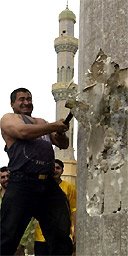
On the same day, the Guardian reported Kadhim al-Jubouri (the man made famous by his attempt to smash down a statue of Saddam in Firdous Square) as saying: “I really regret bringing down the statue. The Americans are worse than the dictatorship. Every day is worse than the previous day.” Now, this really is something coming from a man who was tortured by Saddam’s goons. I also remember Mr al-Jabouri being interviewed not long after the statue was brought down. If memory serves, he said: “Do you think the Americans crossed an ocean to save us? Do you think they will leave? They will never leave.”
Sunday, February 11, 2007
Free the Grenada Thirteen
One of the more astute strategic decisions of the socialist government that ruled Grenada between 1979 and 1883 was not to challenge the constitutional position of Queen Elizabeth as head of state. This is what allowed the rather paradoxical hearing last week of English Law Lords sitting as the Privy Council in London to rule upon the fate of 13 socialist revolutionaries, who have been in gaol for the last 23 years.
They are incarcerated in a 17th century prison, and were tortured for the first nine years. The only woman prisoner, Phyllis Coard, was released early due to resulting mental health issues.
The thirteen are former ministers of the People’s Revolutionary Government (PRG) or officers of Grenada’s People’s Army, they were tried by a kangaroo court following the US invasion in 1983. Their trial was widely regarded as a travesty, with the proceedings being organised and paid for by the American government, the prosecution being allowed to choose the jurors, and the defence being denied access to the documents that could establish their innocence. Amnesty International published a damning report of the proceedings.
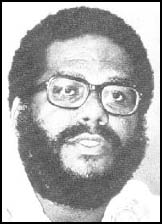
Nevertheless, the essential tragedy of the Grenadan revolution is that despite the enormous and lasting progress that the country made under the brief rule of the PRG, the period ended with Prime Minister Maurice Bishop dead, and his childhood friend and comrade, Bernard Coard (pictured), in prison for his murder. What went wrong?
Before we examine this, we need to understand the circumstances that led the new Jewel Movement coming to power. During the 1970s, Grenada was ruled by the frankly nutty, UFO enthusiast, Eric Gairy and his Grenada United Labour Party, who won an election in 1976, widely considered to have been completely rigged. The New Jewel Movement (NJM) was leading a popular campaign against illiteracy, poverty and economic under-development. Grenada is only a very small island, with a population of about 110000, and historically very poor.
It was widely known that from 1977 Gairy began receiving advice from General Augusto Pinochet of Chile and the Grenadan police and military were receiving "counter insurgency" training from the Chileans. In 1979 a rumour began circulating that Gairy planned to use his "Mongoose Gang" to assassinate leaders of the New Jewel Movement while he was out of the country. So in March that year, the NJM took over the nation's radio station and assumed the government without a shot being fired.
What followed was a remarkable four years of progress. A new airport was constructed to establish a tourism base for the economy, and huge strides were made in education and housing. As Bernard Coard, former Minister of Finance, explained in an interview from prison in 1994: “"You can generate a lot of support from people through their pocketbooks. We set in place a mass housing program, often benefitting the poorest people in Grenada, the people in Gairy's base, which influenced thousands of people, especially in a country where one house fits six or seven. We also relied heavily on the educational aspects of our mass rallies. … These mass rallies, usually led by Maurice Bishop, combined the spirit of the revolution with the basic information, economic factors local, national and international, that the people needed to understand their lives and surroundings. So these rallies were a new form of literacy which built political consciousness and support for the revolution.”
Significant numbers of Cuban and Russian doctors and teachers came to the island, and the level of illiteracy was halved during the four years. Even the nuns welcomed them. For the first time ever the Granadan government paid for students, often from modest backgrounds, to go overseas to study. Coard was himself an educationalist, a former academic at Sussex University, and a specialist in how black children were failed by British schools in the 1960s.
The plan was that the income from the airport, combined with a skilled workforce, could allow the island to break out of economic dependency. As Coard explained: "It's a very small island. You can have 10,000 people here unemployed and call that 40% unemployment. Figures here get magnified. But five factories of industries could wipe that out. Our plan was to use the money from the airport to recreate the nature of work in Grenada, to have fully high- tech employment based on the next stage of the education program, vocational-technological education. We put education first to develop the human resource, which should be seen as constant capital, for national economic development".
The difficulty was that although the NJM had no choice but to assume power, and had wide passive support, the social base that it stood on was very narrow. The NJM was largely the party of the educated and privileged elite, and the tiny island Granada simply didn’t have a workers movement, and most of the population were culturally impoverished. The NJM had no choice other than to rule Granada without participatory democracy. Neverterless, the NJM government permitted much greater levels of debate and political freedom than ever before seen in Grenada.
Given less unfavourable circumstances the NJM could have survived, but the right wing government of Ronald Reagan was determined to destabilise Grenada, through sanctions, sabotage, and military threats. The government therefore had a terrible strategic choice of appeasement to Washington which would mean rolling back the social programmes, and stopping the planned for industrialisation, to become a tourist led economic dependency of the USA; or alternatively turning toward the USSR.
Accounts of the NJM often paint Coard as a Stalinist, but this is a crude misreading of the sitiation. Firstly, the alignment of Grenada with the USSR was forced upon them by the Americans, although as a former member of the British Communist Party Coard was probably warmly disposed to it. But most crucially, the NJM was a democratic party, and most of the party membership and the leadership were in favour of industrialisation, and seeking the aid of the USSR was simply pragmatic. Had they been around today they would probably have turned to Venezuela.
This is when the split with Maurice Bishop occurred. Bishop wanted to appease the Americans, and although his support in the party was tiny, he was much more popular outside the party, because the NJM had promoted him as a figurehead. The appalling tragedy of 1983 was that the Coard faction of the NJM placed Bishop under house arrest, fearing that Bishop was planning a populist stunt to oust the party leadership in order to steer a course more acceptable to Washington.
According to US academic, Rich Gibson, who has spent some time with the prisoners: “All concerned could easily see that a split in the party would only prompt a US invasion, with the likely death of every militant. Yet that tragedy happened anyway, and the ground work for it was not simply created by the failures of the NJM leadership (among them the sheer exhaustion of the leadership who took on too much themselves, and the denial of the key vision of the women in the party who saw this coming but whose voices were not really heard), but also laid by problems inherent in what was the socialist project. The relationship of internal problems to external US pressure (which was incessant and ranged from direct violence to subtle sabotage), is important to understand.”
Bishop was released from house arrest by a large crowd of people. There was violence, and Bishop was executed. I give this account very tersely not to be evasive but because we don’t really know what happened. It is not clear whether or not Bishop was planning a coup, and it is not clear whether his death was premeditated, and if so by whom. The Cuban government condemned the execution of Bishop. Yet Coard has many international supporters, and supporters within Grenada, who claim he had no part in Bishop’s death.
Having done so much to create these tensions, the USA invaded. The Americans have subsequently created a myth that there were Cuban and even Russian troops in Grenada. This is hogwash, they ran into determined military resistance from the Grenadan People’s Army. Defending the glimpse of a better life they had had under the NJM, the young men and women of the GPA fought ferociously to defend Granada and for the vision of mankind’s socialist future. The Empire was briefly stopped in its tracks, and only subdued Granada after six days, after committing an extra 7000 troops, equivalent to an army of 4,500,000 invading Britain. (No one who saw it will ever forget the bizarre spectacle of Enoch Powell’s impassioned support for Grenada on BBC’s Newnight! And ITV realy did have viewers ringing to ask whether Coronation Street would be affected (it is made by Granada television))
Both Maurice Bishop and Bernard Coard, were principled, good men, who achieved much. The NJM government transformed Grenada: the airport is now operational,, and the literacy improvements have been maintained. They were victims of terrible circumstances, intolerable pressure from outside, and simply insufficient human and physical resources to prevail.
It is fantastic news that the Privy Council has declared that the cases should be sent back the Grenada’a High Court for re-sentancing. Hopefully the thirteen will soon be free, their incarceration has been a vindictive and spiteful one, whereby the US have sought to make an example to all who challenge its power. Let us hope that Bernard Coard and his comrades find some peace at last.
Saturday, September 30, 2006
Turn off the oil

Following the Socialist Resistance AGM, which I attended as an observer, I was asked to write a short article for their paper about the war in Lebanon. Here is a sneak preview.
The recent war has been a disaster for Lebanon. Some 5000 dead, accompanied by destruction of the country’s economic infrastructure, an environmental catastrophe due to oil pollution, and the area south of the Litani river covered in cluster bombs. The responsibility for these atrocities lies with the Israeli Defense Force and its political masters. Nevertheless, Hezbollah also made political and military choices.
It has been transparent since 1973 that the USA will not allow Israel to suffer any catastrophic military defeat. Significant early advances by the Syrian and Egyptian armies during the Yom Kippur war were reversed by Israel only with massive US military support. What is more, there has also been a long tradition of guerrilla attacks on Israel being used to enhance the political and military prestige of competing Arab forces. For example, the promotion of guerrilla actions by Fatah during the 1960s, funded by Saudi Arabia, to undermine the Nasserite leadership of the PLO, and indirectly undermine the authority of pan-Arabism. There has also been a tradition, particularly during Yasser Arafat’s leadership of the PLO, of bargaining the suffering of civilian targets of Israeli aggression to gain diplomatic advantage.
The events of 12th July 2006 on the Israeli-Lebanon border will always be in dispute. It is entirely plausible that the IDF were anyway planning an attack on Lebanon. Nevertheless the nature, scale and ferocity of the Israeli response to Hezbollah’s military action would have been known to the Hezbollah leadership in advance. The fact that Hezbollah troops were dug in and had rockets deployed suggests that the action was a deliberate precipitation of war by Hezbollah.
The military defeat has created a political crisis for Ehud Olmert’s government, but it has not caused a general crisis of confidence in the Zionism, nor in a general questioning of the IDF’s capability. The confidence of Israel remains intact for the simple reason that the war did not undermine the central cornerstone of their defence, which is the backing of the USA.
No military or political struggle will prevail against Israel unless it also threatens the USA, which leads to a very simple question. Why was no voice raised in the Middle East calling for oil production to be halted? Even Hezbollah’s greatest ally, Iran, did not use its economic power.
In contrast, in 1973 the OPEC producers scaled production back 5%, then 10%, and then Abu Dhabi responded to President Nixon’s granting of $2.2 billion of military aid to Israel by initiating a total oil embargo. The embargo lasted for 6 months before Saudi Arabia broke the strike.
American domination of Middle East oil has rested on two pillars, unconditional support for both Israel, and the House of Saud. Having the Saudis as allies inside the Arab tent has decisively diverted the direction of Arab politics, but the House of Saud have also had to respond to their own pressures.
A crucial difference between 1973 and 2006 is that within the Arab world both the political left and Pan-Arabist nationalists have been substantially defeated. It was the Egyptian leader, Gamal Abdel Nasser who promoted the idea of "Arab oil for the Arab people", and was a constant threat to the Saudi monarchy. In 1955 there was an attempted uprising by pro-Nasser Saudi officers in Taif, and another attempt in 1956 in Dhahran, and in 1956 fifteen thousand oil workers went on strike in Arabia chanting Nasseite slogans. With CIA help the Saud family undermined Nasser both drawing him into a protracted proxy war in Yemen, and also undermining Nasser’s international prestige by promoting Fatah as leaders of the Palestinians.
Nevertheless, in 1973 King Faisal was under sufficient pressure from his own population, and was sufficiently fearful of Egypt’s new President Sadat reverting to Nasserism, that Arabia played a leading role in using the oil weapon to attack US support for Israel.
Pan-Arabism was historically defeated because it was predicated upon Arab states playing the super-powers, including Britain in the 1950s, off against each other; and this is no longer possible; also because of rivalry between the different Arab elites, for example between Nasser and Kassem of Iraq, about who would be the leader of the united Arabs. But most importantly, because the power of pan-Arabism lay in its ability to inspire the Arab workers and peasants that national unity would lead to solving their day to day impoverishment and misery. Yet awakening the working classes was the last thing the Nasserites or Ba’athists would ever do.
Zionism cannot be defeated without threatening the link between Israel the USA, and the key to isolating Israel is to use the economic power of the oil producers. Yet that oil is controlled by corrupt elites who depend on US support to survive. The task of the left is not to cheer lead for the Hezbollah, but to raise again the demand of Arab Oil for the Arab people, and to demand that the flow of oil be turned off in response to Zionist aggression.
Wednesday, September 27, 2006
Before the Taliban

It is the tenth anniversary of Afghan capital. Kabul, falling to the Taliban. It is worth noting that the Taliban did not take power until seven years after the Russian withdrawal. By 1996, half of Kabul had already been destroyed by the mujahideen, who had been armed and supported by the USA. Tens of thousands were killed in fighting over the city.
Today Afghanistan is in the grip of warlordism and terror. Human Rights Watch has described the atrocities:: "committed by gunmen and warlords who were propelled into power by the United States and its coalition partners after the Taliban fell in 2001" and who have "essentially hijacked the country". The report describes army and police troops controlled by the warlords kidnapping villagers with impunity and holding them for ransom in unofficial prisons; the widespread rape of women, girls and boys; routine extortion, robbery and arbitrary murder.
The report by Human Rights Watch spells out a desperate situation for education in Afghanistan. “Schools are being shut down by bombs and threats, denying another generation of Afghan girls an education and the chance for a better life. Human Rights Watch found entire districts in Afghanistan where attacks had closed all schools and driven out the teachers and non-governmental organizations providing education. Insecurity, societal resistance in some quarters to equal access to education for girls, and a lack of resources mean that, despite advances in recent years, the majority of girls in the country remain out of school. Nearly one-third of districts have no girls’ schools. ”
Afghanistan is now the world’s largest producer of heroin, in 2004 it produced 90% of the world’s crop. No alternatives exist for farmers and the promised new roads and irrigations projects that would allow diversification have never materialised. The UN World Food Programme reports that: “over 50 percent of children are malnourished in Afghanistan, while one in three of people living in rural areas are unable to meet daily basic nutritional requirements.”
So imagine a different Afghanistan. Imagine an Afghanistan where the main crop is not Opium but wheat. Where 26% of land is growing wheat producing 3 million tonnes per annum. Imagine an Afghanistan where raisins and cotton are grown for export, Imagine an Afghanistan which exported 30000 tonnes of cotton fibre, and 57000 tonnes of raisins per year (the 4th biggest world producer of raisins). Imagine an Afghanistan with an intact and extensive irrigation system to support this agricultural diversity. Imagine an Afganistan with an extensive road system to allow agricultural produce to be taken to market. Imagine an Afghanistan where the main export was natural gas not narcotics. Imagine an Afghanistam with 120000 tourist visitors per year.
Imagine an Afghanistan with a functioning railway network, financed by Iran and with French technical expertise. Imagine an Afghanistan where women had full legal equality, where a quarter of the government’s budget was spent on education, and secular schools were opening in every village, for girls and boys. An Afghanistan where Kabul had a university, and where there were schools of medicine, science, pharmacy and engineering. (The picture shows a Russian built hydro-electric dam in Afghanistan)
Imagine an Afghanistan under Communist rule. This is not science fiction or an alternative reality, this is Afghanistan as it used to be. And remember that the Russian military intervention was at the request of the legitimate Afghan PDPA government to counter an Islamist insurgency being stoked up by the Americans, who cared not one jot for all this social progress. The Kremlin were very reluctant to intervene, and at first KGB secretary Andropov vetoed any intervention as against the USSR's interests.
This is the Afghanistan that the US destroyed by funding and arming the Islamist militias during the 1970s and 1980s. This is the Afghanistan to which the US recruited, trained and armed Osama Bin laden to commit terror atrocities against.
Subscribe to:
Posts (Atom)