Thursday, August 31, 2006

I am on the Weakest Link, Goodbye


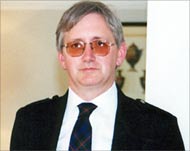
Well this isn't socialist news as such, but it is news about a socialist - and hopefully not as dire as Galloway on Big Brother! For those of you who know me, I'm sure you're used to me making a twat out of myself. But if you want to see me make a twat out of myself in front of 6 million people, watch the Weakest Link on Thursday 7th September, 5.15pm BBC2. I'm sure this is going to be terribly embarrassing, and they'll cut it to make me look a complete idiot, but hey, it's all in the name of fun. I got a cutting remark in on her fox hunting, which they may or not let in. And I'm sure they'll be all to happy to name and shame me as a member (at the time anyway) of George Galloway's party. I won't tell you what happens, you'll have to watch and see, and I hope you all have a good laugh at my expense!

Monday, August 21, 2006

Why walk away?

I don't understand. According to Tommy Sheridan the "overwhelming majority" of SSP members support him. After his court case he told the Daily Record he was going to smash the "scabs" who failed to support his version of events; drive them out of the leadership. The 'SSP Majority' blog talks of "democratic renewal" of the SSP. The conference has been brought forward to October. So why has Tommy decided to walk out of the SSP. Is it not worth 'saving' the party he did so much to help build from the existing leadership?

Without commenting on the issues in dispute (I'll do that elsewhere) it seems extraordinary that the SSP can be abandoned so easily after years of work and success on the electoral terrain. The ostensible reason which Tommy gave was that there would be a long political fight with his opponents, even if he won the convenor election, and this would not be worth the effort. This is barely credible, because at this stage, it was clear that if Tommy won the convenor's position, then probably the majority of those he is in conflict with would have walked out of the party. Even though he has said he regrets using the label "scabs" it is scarcely credible that they could have remained in the same organisation.

The problem with a split such as this is that, given the absence of a party discussion, there is no political clarity on its roots. It was too much to hope that the two platforms, the CWI and Socialist Worker, would say no to Tommy's attempt to bounce them into leaving.

What will the working class make of it? Undoubtedly some people will draw the conclusion that those bloody socialists are falling out with each other again. They will now suffer the cost of the divisions which exist on the British level, with fractious organisations fighting each other rather than concentrating on fighting for the interests of the working class. It's a bloody disaster.

Wednesday, August 16, 2006

Be sceptical. Be very, very sceptical.


Well worth reading from Craig Murray (Although I am sceptical of his view of Striling University Communist party having comrades beaten up for not following the line, which sounds like unnecessary red-baiting embelishment to me)

As Britain's outspoken Ambassador to the Central Asian Republic of Uzbekistan, Craig Murray helped expose vicious human rights abuses by the US-funded regime of Islam Karimov. He is now a prominent critic of Western policy in the region. this is what he wrote on his blog:

The UK Terror plot: what's really going on?

I have been reading very carefully through all the Sunday newspapers to try and analyse the truth from all the scores of pages claiming to detail the so-called bomb plot. Unlike the great herd of so-called security experts doing the media analysis, I have the advantage of having had the very highest security clearances myself, having done a huge amount of professional intelligence analysis, and having been inside the spin machine.

So this, I believe, is the true story.None of the alleged terrorists had made a bomb. None had bought a plane ticket. Many did not even have passports, which given the efficiency of the UK Passport Agency would mean they couldn't be a plane bomber for quite some time.In the absence of bombs and airline tickets, and in many cases passports, it could be pretty difficult to convince a jury beyond reasonable doubt that individuals intended to go through with suicide bombings, whatever rash stuff they may have bragged in internet chat rooms.

What is more, many of those arrested had been under surveillance for over a year - like thousands of other British Muslims. And not just Muslims. Like me. Nothing from that surveillance had indicated the need for early arrests.Then an interrogation in Pakistan revealed the details of this amazing plot to blow up multiple planes - which, rather extraordinarily, had not turned up in a year of surveillance.

Of course, the interrogators of the Pakistani dictator have their ways of making people sing like canaries. As I witnessed in Uzbekistan, you can get the most extraordinary information this way. Trouble is it always tends to give the interrogators all they might want, and more, in a desperate effort to stop or avert torture. What it doesn't give is the truth.

The gentleman being "interrogated" had fled the UK after being wanted for questioning over the murder of his uncle some years ago. That might be felt to cast some doubt on his reliability. It might also be felt that factors other than political ones might be at play within these relationships. Much is also being made of large transfers of money outside the formal economy.

Not in fact too unusual in the British Muslim community, but if this activity is criminal, there are many possibilities that have nothing to do with terrorism.We then have the extraordinary question of Bush and Blair discussing the possible arrests over the weekend. Why? I think the answer to that is plain. Both in desperate domestic political trouble, they longed for "Another 9/11". The intelligence from Pakistan, however dodgy, gave them a new 9/11 they could sell to the media.

The media has bought, wholesale, all the rubbish they have been shovelled. We then have the appalling political propaganda of John Reid, Home Secretary, making a speech warning us all of the dreadful evil threatening us and complaining that "Some people don't get" the need to abandon all our traditional liberties. He then went on, according to his own propaganda machine, to stay up all night and minutely direct the arrests. There could be no clearer evidence that our Police are now just a political tool. Like all the best nasty regimes, the knock on the door came in the middle of the night, at 2.30am. Those arrested included a mother with a six week old baby.

For those who don't know, it is worth introducing Reid. A hardened Stalinist with a long term reputation for personal violence, at Stirling Univeristy he was the Communist Party's "Enforcer", (in days when the Communist Party ran Stirling University Students' Union, which it should not be forgotten was a business with a very substantial cash turnover). Reid was sent to beat up those who deviated from the Party line.

We will now never know if any of those arrested would have gone on to make a bomb or buy a plane ticket. Most of them do not fit the "Loner" profile you would expect - a tiny percentage of suicide bombers have happy marriages and young children. As they were all under surveillance, and certainly would have been on airport watch lists, there could have been little danger in letting them proceed closer to maturity - that is certainly what we would have done with the IRA.

In all of this, the one thing of which I am certain is that the timing is deeply political. This is more propaganda than plot. Of the over one thousand British Muslims arrested under anti-terrorist legislation, only twelve per cent are ever charged with anything. That is simply harrassment of Muslims on an appalling scale. Of those charged, 80% are acquitted. Most of the very few - just over two per cent of arrests - who are convicted, are not convicted of anything to do terrorism, but of some minor offence the Police happened upon while trawling through the wreck of the lives they had shattered.

Be sceptical. Be very, very sceptical.

Tuesday, August 15, 2006

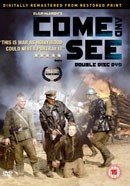
Come and See


Someone once told me, and I found it true, that you don’t really know what love is until you have children. Similarly I don’t think I ever really hated the fascists until I saw “Come and See”.

Last night we showed this Russian war film at our regular socialist film night in Swindon, there were 15 people there including officials from the T&G and GMB, and members of the Unison branch committee. The 1985 movie follows a young and simple peasant boy through leaving his family to join the red army partisans, separated from them he passes through the circles of hell, as he experiences and witnesses the bestial degeneracy of the Nazi occupiers.

The film has been described as a Russian “Apocalypse Now”, but that is a lazy comparison. The surrealism of “Apocalypse Now” was quite studied and literary, whereas the dream like quality of “Come and See” derives only from the difficulty we have of believing what we are seeing. In any event the narrative structure of portraying war as a charnel house run by madmen, and viewed through the eyes of a simpleton witness owes nothing to Hollywood, and was first used in European literature in the 17th Century in Grimmelhausen’s deeply disturbing “Der Abenteuerliche Simplicissimus Teutsch“ (rarely read in English, but well worth it, usually translated as “Simplex Simplicissimus”) and his slightly later “Ausführliche und wunderseltzame Lebensbeschreibung der Ertzbetrügerin und Landstörtzerin Courasche“ (Mother Courage).

Normally war films, even those that portray atrocities, present them in such a familiar format, that we are habituated to war, and blase to the violence. To a certain degree this was even true of “Shindler’s List”, where the conventionality of the story and the Hollywood sentimentality stood as a barrier from the audience really being traumatised. The remarkable achievement of Elem Klimov’s film is that there is no sentiment, indeed there is hardly any character development, we do not identify with the simple boy because we are manipulated to thinking he is like us, but only because he is a human being.

We all know that the Nazis burned whole villages, women and children in barns, over 600 massacres in Belarus alone, but only in this film are you in the barn. We all know that the Nazi Einsatzgruppen were cruel murderers, but in this film we see (all too believably) both the Bacchanalian sensuality of the carnage, but also the detachment that it was only a job, and one they believed ideologically necessary.

But neither is the film inaccessible or boring. It has a slow start, but the tempo accelerates throughout the film, and it is thoroughly spellbinding.

To return once more to the “Apocalypse Now” comparison, in that film (following the theme in Conrad’s book) the Kurtz character finds the horror of what he is capable of by leaving civilisation behind. This is a fundamentally racist account of colonialism, whereas in “Come and See”, as the Einstazgruppe rounds up the families and children for slaughter, they are playing a propaganda recording to the Russians that they will be transported to Germany, which is a civilised country where everyone has a toothbrush. The barbarism of war is a barbarism not derived from our primitive past, but the dark underside of our own society.

Today the killing fields are not in Belarus but in Iraq and Lebanon. Neither the Americans nor the Israelis are politically comparable to Hitler's Nazis, but war has its own logic.

Friday, August 11, 2006

Israel Attacks US


Great piece of satire by Jerry Ghinelli:

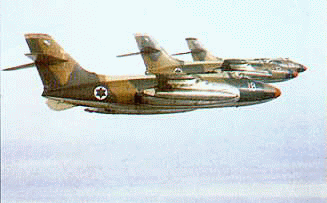
The government of Israel today launched a massive air assault on suspected terrorist targets along coastal cities of the United States of America. Termed operation Just Reward II, hundreds of Israeli fighter jets streamed across the Atlantic in precise formation and fired surgical air strikes at alleged terrorist strongholds in the heavy Muslim populations of Jersey City and North Bergen, New Jersey. The jets then continued south into Elizabeth and Newark, inflicting massive destruction in the densely populated northeastern US state. Reaction to the attacks was swift. President Bush asked for restraint, but stated emphatically that “Israel had the right to defend itself.” The President, who took an oath to defend the US and to preserve, protect and defend it against all foreign and domestic enemies, said that the fight against suspected terrorist sites and alleged al-Qaeda involvement, coupled with our close relationship with Israel, requires special sacrifices by the American people and special exceptions to both US and international law.Earlier in the day, the US Congress passed a unanimous resolution in both houses, backing the Jewish state. Even New Jersey Senators Frank Lautenberg and Robert Menendez voted with the 98 other US Senators, backing Israel’s right to self-defense. Claiming there were terrorists in New Jersey who had links to al-Qaeda, Hamas and Hezbollah, as well as other radical Islamic groups, New York Senators Hillary Clinton and Chuck Schumer appeared at a UN rally just across the river from the Israeli incursion and pledged their unwavering support for Israel. “We are all Israelis now,” Senator Clinton proudly proclaimed.
Read more.

Thursday, August 10, 2006

Protest at RAF Brize Norton


RAF BRIZE NORTON
Carterton, Oxfordshire

This RAF base is being used to refuel American transport aircraft taking weapons to Israel for use in Lebanon.
This is active military support for Israel by the British government

Two protests.

Saturday 12th August
12;00 noon/ Protest at main gates
Organised by Swindon Stop the War Coalition and CND.

Saturday 2nd December – National Demonstration, assemble 12:00 noon in Carterton.

Tuesday, August 08, 2006

Police surround terrorist's house


I was pleased to see Kelvin, and Roy, two peace activists from Swindon, cooperating with the police seeking to arrest Tony Blair.

Police had erected a barricade at the end of Downing Street to prevent the terrorist escaping.

watch the Video.

Thanks to Simon Bridewell for Audio and video of the speeches at the demo.

Monday, August 07, 2006

Is this what democracy looks like?


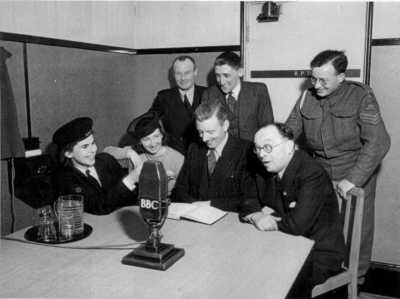
Last Friday I went to BBC Radio 4’s “Any Questions” that was being broadcast from Swindon. What a curious and frustrating evening!

There were about 150 people in the audience, and I recognised well informed and articulate activists from the World Development Movement, the anti war campaigns, animal welfare activists and anti—ID card campaigners.. Indeed the warm up debate for 30 minutes before we went on air was lively and interesting.

During this warm up the new editor of the Today programme fielded questions. There were a number of probing and thoughtful questions, and the debate was engaging and passionate. I asked why the BBC had referred to the capture of Israeli soldiers as “kidnapping” whereas the seizure of almost the entire Palestinian government by the Israelis was described as “seizure”. He admitted that the BBC had been wrong. An Asian man asked why the BBC referred to legitimate political movements such as Hamas and Hezbollah as terrorists, and life long “Small is beautiful” activist, John Papworth, asked why the BBC news concentrated on trivia, while the big issue like the war and global warming were sidelined. What a prophetic question!

The panel was: Sir Max Hastings: right wing journo; Jackie Ballard, Director General of the RSPCA, and former Lib Dem MP; Roger Scruton, neo-liberal philosopher and local boy; and Colin Blakemore, Chief Executive of the Medical Research Council.

The first question set the tone, that even on issues of war and peace, the BBC were taking a whimsical tone. “if Bush and Blair were being considered for sainthood, how would you rate them on a scale of 1 to 100”. That was as close to politics that we got all evening, and did give Max Hastings the opportunity for a passionate attack on Blair, Bush and the Iraq war.

But then it all went downhill. Jackie Ballard is barely sentient, and I have had pets more capable of insightful comment. Colin Blackmore was very well informed about the issue of animal experimentation, but had no real opinions on any other subject, and Roger Scruton was able to hide the depth of his libertarian politics behind the country gent, "law and order" persona he projects.

There were a number of problems. Firstly, despite the fact we know that several questions were submitted about Iraq, Lebanon, the labour party leadership, the fate of Cuba after Fidel, and other topical issues, the producers blocked all of those in favour of questions like: “what brings culture to a town”, and “Have clever clogs gone to the dogs”, or “has feminism done away with real men”

There were indeed questions about animal rights and ID cards, but everyone on the panel agreed with each other on animal rights, and despite being director of the RSPCA Jackie Ballard had clearly never thought about the issue. On ID cards, they were all in principle in favour, but none of them had strong opinions. This is very poor research on half of the BBC, picking questions that the panel were not able to truly debate.

The questions were also a complete stitch up. Although hundreds of questions were submitted, the first question about Blair’s sainthood was from someone clearly on first name terms with the local BBC, and two questions went to Matt Holland, a local self publicist, one of which he passed to his daughter. A local poet, Tony Hillier, told me his question had been given to him by the producers. Afterwards there was a lot of dissatisfaction from audience members that no serious issues had been discussed. What a stitch up.

There was also a problem in there being no politicians on the panel, so Roger Scruton was able to make racist remarks about immigrants during the question on culture, and outrageous comments about what women "really want" (to stay at home and be supported by their husbands apparently), as answer to a question on feminism, and yet no-one challenged him.

The other problem is that Any Questions follows the “Brain’s Trust” format, that the panel are experts and the audience are there to listen in awe at their wisdom. This meant there was no way of challenging the consensus of the panel, or bringing out the breadth of opinion over for example ID cars or animal rights that exists.

The Brain’s Trust was an phenomenon of the 1940s when they really did have the intellectuals of the day on the radio to debate, and the audience was much less educated. It would be hard to imagine that the BBC could find an audience less well informed or educated than Jackie Ballard anywhere in the world, unless they bought it from a garden centre. It also requires some genuine desire to debate, not just be pleased with the sound of your own voice. Roger Scruton for example is an intelligent and controversial figure, but he needs to be counterbalanced with someone who will take on his neo-liberal arguments.

Everything about the programme was second rate, they even had the B list Dimbelby to host it! It reflects the BBC's conception of democracy, where the great and the good pontificate, and the majority of the population are just there to clap.

Friday, August 04, 2006

Have things got worse in Russia?


In a recent comment to the posting about Cuba, SWP member Redaspie, queried whether there had been a drop in the standards of living in the former USSR, and the other Comecon countries. This is an interesting question, because whether or not there has been a social collapse in Russia is relevant to the debate of whether or not Russia was indeed state capitalist. It is also pertinent to Dave Broder' of the AWL who is arguing in the same thread of comments that he wouldn't be upset if the Cuban government was replaced by free market capitalism.

Using as sources those well known apologists for Stalinism,
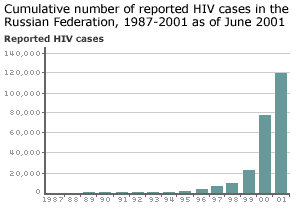
Unicef, the World Bank and the BBC, we find that the world bank reported in 2000 that in the USSR overall incomes have dropped by 50%. In some regions, such as the Caucasus and central Asia, over half the population now live in absolute poverty - defined as living on an income of $2 per day or less.

Unicef report 18 million children on less than $2 per day, 60 million children in poverty.
Unicef reports; "In Central Asian countries less than half of 15-to-18-year-olds now attend secondary school. Ten years ago more than two-thirds attended. " There were also at least one million displaced as refugess by war within the borders of the former USSR.

World bank: "
Since the poverty levels peaked in 1999 at 41.5%, poverty was cut in half by 2002 to 19.6%. About 30 million people have improved their financial standing, however the number of people in poverty is still high - every fifth Russian lives well below the official poverty line. According to the World Bank, the most vulnerable group was the rural population. About 30.4% of the rural population lives in poverty, while 15.7% of the urban population is poor. Children under 16 have a higher incidence of poverty, about 25%. According to the report, the North Caucasus, South Siberia and parts of Central Russia are the poorest regions in Russia."

Recently,
Alexandra Ochirova, the chairperson of the Chamber’s committee (A Kremlin initiated committee) on social development said 20 million Russians live below the subsistence level, and this accounts for 15 or more percent the population. More specifically, one Russian in seven cannot meet even his or her basic demands for food and clothing.
“Poverty in Russia is very special for the fact it embraces not only separate sections of the able-bodied population, but more importantly, the ones who have employment,” Ochirova said. “These are mostly workers on government payroll, as well as children aged younger than 16 years old, the disabled and pensioners,” she said. But the most dangerous type of impoverishment is poverty among single mothers. “It’s neediness reproducing neediness,” Ochirova said. A gap in population’s earnings remains huge, too, as the incomes of 80% population decrease all the time while those of the remaining 20% continue growing"

"Russia is a unique country where poverty strikes the working population,” says Mikhail Shmakov, the president of the Federation of Independent Trade Unions. “Poverty is multiplying since the government, the country’s biggest employer, curbs a growth of wages,”

In a report to US Congress on economic state of Russia; “In January 2005, the Russian government monetized many previously in-kind social benefits for retirees, military personnel, and state employees. The cash payments, however, only partly compensated for the lost benefits. After the collapse of the Soviet Union, Russia experienced widespread economic dislocation and a drop of close to 50% in GDP. Conditions worse than the Great Depression of the 1930s in the United States impoverished much of the population, some 15% of which is still living below the government’s official (very low) poverty level. Russia is also plagued by environmental degradation and ecological catastrophes of staggering proportions; the near-collapse of the health system; sharp declines in life expectancy and the birth rate; and widespread organized crime and corruption. The population has fallen by over 5 million in the past decade, despite net in-migration of 5 million from other former Soviet republics.”

Another interesting source is the U.S. Department of Commerce Economics and Statistics Administration: “Prior to the dissolution of the Soviet Union in 1991, that country’s economic and social system worked in a practical sense — meaning most people had a place to live and food to eat. Although standards of living were below those in the West, particularly in housing, daily life was predictable. The Soviet leadership was legitimately able to say that their form of socialism had succeeded in virtually eliminating the kind of poverty that existed in Czarist Russia. Russian citizens now live in different times. The country’s transformation to a more open economic system has created, temporarily at least, a large, new group of people in poverty.”

The recent TV series following 21 year olds from the former USSR (you know one of those progs that follow people every 7 years) was heartbreaking. Whole towns that previously had viable industries now at a subsistence level. There was an interesting report recently on the BBC about how there has been a disastrous collapse of bio-diversity in Siberia, as in eastern Russia people have had to return to hunting for basic subsistence.

In the former DDR, comprehenisve education lost, rent controlled apartments lost, full employment lost. abortion rights reduced, full employment lost. Former citizens of the DDR discriminated against as their academic qualifications not recognised, paid lower wages than Wessies, etc. Yugoslavia has been consumed by ethnic conflict.

Even if we take one of the economic success stories, Lithuania, we find that country is the biggest source of women traded as slaves into prostitution, according to the
International labour organisation. Hungary has become a centre for exploitation sex tourism.

Whe comrades talk about the restoration of capitalism in the former Comecon countries as just a shift in the mode of exploitation, or a "step sideways", perhaps they should look at the real consequences?

Wednesday, August 02, 2006

Raul Castro speaks

This is the latest speech by Raul Castro, made in June this year. He discusses, in his capacity as head of the army, the view held by the Cuban government that in 2003 there was an increased danger of invasion by the USA, whose confidence was engorged by the ease of their onslaught on Iraq. That danger passed, but clearly the US government has its eye on intervening in Cuba should Fidel step down. Raul discusses this scenario.
(Raul pictured with Che and Fidel below)


“We should not forget that [the American government] have drawn up a so so-called transition to capitalism, banking on an end to the Revolution when its historical leadership is no longer here. For that reason they are maintaining the so-called Commission for Assistance to a Free Cuba with a designated U.S. administrator and everyone to the front, like in the good old days of the Yankee cannons throughout Latin America.

“We are confronting an enemy whose obstinacy and arrogance frequently leads it to commit errors, but that does not mean that it is stupid. It knows that the special confidence given by the people to the founding leader of a Revolution, is not transmitted, as if it were an inheritance, to those who occupy the main leadership posts in the country in the future.

“I reiterate what I have affirmed on many occasions: the Commander in Chief of the Cuban Revolution is solely and uniquely the Communist Party, as an institution that brings together the revolutionary vanguard and is a sure guarantee of Cuban unity in all times, can be the worthy inheritor of the confidence deposited by the people in its
leader. That is what we are working for and that is how it will be, the rest is pure speculation, not to call it by another name.

“Just as we have won all the battles, as much within Cuba as in fulfilling our internationalist duty, we shall overcome the enemy who tries to hide within our ranks, we shall further consolidate the Revolution and we shall make ourselves stronger on all fronts.”

The important point to note in this speech is that Raul stresses that Cuba has a collegiate leadership – via the Communist Party – not individual rule by Fidel. Furthermore, by stressing the role of the Communist Party, Raul is dispelling any idea that the Army (his army) might take over the government. Although Raul is tipped in some quarters as an automatic successor to Fidel, the constitution requires an election of the 601 deputies to the National Assembly of People’s Power, which then elects the Council of State, who then elects the President.

Within the Party there are those who favour taking the Chinese or Vietnamese road of opening Cuba to international capital. The faction around Fidel, including Raul, are opposed to that policy. It is highly unlikely that any succession to Fidel would lead to an open debate between party factions, but behind the scenes there will be manoeuvring, and Raul’s succession cannot be guaranteed.

But he may be the best candidate. Although he lacks the personal charisma and diplomatic experience of Fidel, he does have the authority of participation in the revolution. He has also proven ability, having been chief of the army during its victorious war against the South African Apartheid forces in Angola. Under raul's leadership, the Cuban army were also the only non-Arab country to ever fight rifle in hand against israel - when 1500 Cubans fought on the Golan heights during the 1973 war. He is also the candidate who embodies continuity of economic policy.

But he is also 75 years old. Long term stability requires that the Castro supporters in the party reach out and encourage popular participation in defence of the revolution.

Tuesday, August 01, 2006

Raul Castro takes the helm


By a curious coincidence today’s Morning Star includes an article by US activist, Ron Ridenour, concerning the future of Cuba, entitled “beyond the Crossroads”. He quotes Raul Castro from his 1994 speech “Si, se puede” (Yes, one can), which signalled "the start of a campaign against passivity, routine and bureaucracy."

Ridenour points out that there have been tangible signs of success. “In contrast to a plethora of prostitutes and hustlers, these opportunists are now rare. I never frequent tourist spots where some prostitutes are said to hang out, but there are fewer and they are not walking the streets. Some young men still hustle stolen cigars, but they are fewer and they are more wary of being caught.”

But Ridenour also poses the very good question: “If the working class was really opposed to "passivity, routine and bureaucracy," why did it not initiate its own campaign against them?”
As Ridenour explains: “This is so, first and foremost, because the working class does not control the means of production or the country's internal and external politics - not directly. Union leadership has some input at top levels, but union leadership is appointed by the top. There are no demonstrations without the top authorising and organising them. Strikes are not permitted, although technically not illegal. Communist Party directors do not allow real grass-roots debate about policies in the media. Critique only occurs when leadership decides to take up a controversial theme.”


There was an interesting article about this question in Counterpunch recently by Saul Landau (who made the 1968 film "Fidel") that while supportive of the Cuban revolution makes the point: "Young Cubans, on and off the island demonstrate high levels of culture, except when political themes arise; their eyes glaze. "After I returned from Vietnam in March, a Cuban friend asked about that country. Prospering," I said."Imagine, the Americans bombed them into the Stone Age and they're prospering. Not a bomb has fallen on Havana and yet we live like we're in the Stone Age."This habitual whine should be taken with the proverbial grain of salt. Cuba's investment in human capital did initially stimulate political consciousness. Cubans defended their revolution against a relentless US dirty war, because they understood their cause ­and their enemies. An anti-imperial and a class struggle! Through the 1970s, Cubans remembered the murderous practices and invidious capitalism of the pre-revolutionary era. Today, 75 percent of the population doesn't remember Batista's cruelty or US neo-colonialism. Lacking vivid memory and without having political input, they have grown tired of Party jargon and slogans that bear little relationship to their reality."

As Castro has recently passed power provisionally to his brother Raul, the important question is raised. To defend the revolution how can its mass popular base be strengthened? Raul is of course not the only candidate for taking the job, other possible candidates include: Vice-President Carlos Lage, Parliament Speaker Ricardo Alarcón, and Foreign Minister Pérez Roque.
But whoever takes over will they have to combat the cynicism that so many Cubans feel, and trust popular participation in debate. There is a need for a campaign for socialist democracy to defend the revolution.

Monday, July 31, 2006

Who are we English?

In this month’s edition of searchlight there are two very interesting articles about England fans in Germany. Nick Lowles points out that “there is something unpleasant and aggressive about our society that is not repeated on the continent”, and he reports how there were repeated incidents of xenophobic violence, and celebration of our culture of fighting and drinking. In contrast Mark Perryman points out that this violence is hardly surprising given the level of violence every Friday and Saturday night in pubs and Clubs round England. And while a minority of England fans are hooligans, the overwhelming experience of Germany 2006 was positive, as an amazing 350000 English fans visited the World Cup! Most enjoyed the footballl, and enjoyed mixing with the travelling fans of 32 nations, united by love of football. England fans even laid a wreath, alongside Polish and German fans at Dachau.


This has been a huge shift, as in previous tournaments the numbers of travelling fans was much smaller (just 10000 in Italy in 1990), allowing the ultra hooligans to have a disproportionate influence.

But Perryman asks an important question that will not go away. Who are we English?

The St George flag is a new phenomenon, almost unseen before Euro ’96. It is noticeable where I live that many of the large population of Goan immigrants (who are Portuguese citizens through accident of empire) are strong England supporters, with flags on their cars, and replica shirts. England can be a racially inclusive national identity, stripped of Imperial British baggage. If we want it to be, if we fight for that vision of our national identity, and contest the political right’s authority to shape Englishness.

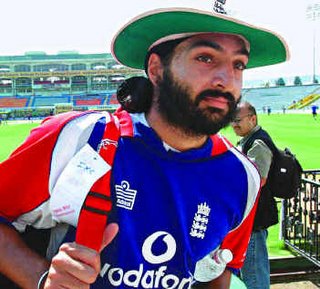
As Scotland and Wales move towards independence, faster to the north than in the west, but both inexorably, then who are we who are left behind? We have no parliament, we have no national anthem. For most of us English we don’t even have a capital city, as London has a culture and dynamic completely alien to us, and most English people can't stand the place. But we do have a football team, and we do have Monty Panesar!

Sunday, July 30, 2006

Drugs are bad mmmmmkay!

Well that's what they'd have us believe. But the demonisation of cannabis, as part of a war on drugs (about as logical as, say, a war on terror) is threatening to make many people's lives hell. And I'm not talking about the 16 year old stoners in the park, but all the people suffering from MS who benefit from the medical use of cannabis. The group THC4MS has never hidden its efforts to supply cannabis chocolate to MS sufferers - who have long reported positive effects from smoking the drug.

Three members of the group are scheduled to appear at Carlisle Crown Court on the 4th December on a charge of conspiracy to supply cannabis, a charge that carries a maximum sentance of 14 years hard labour. If they are found guilty then production and distribution of cannabis products to those in need of them most will be forced to cease.

The following petition, which has attracted over 3000 signatures already, aims to halt the prosecution. Whilst this may seem an extremely improbably outcome, at the very least it serves to lobby the government to take seriously the issue of legalising cannabis for medicinal purposes.

http://www.petitionthem.com/default.asp?sect=detail&pet=2001

Please sign :)

Friday, July 28, 2006

Rich man's war, poor man's fight


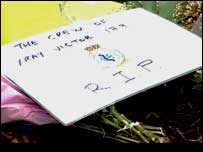
Eighteen months ago, Hercules XV179 was shot down by Iraqi insurgents, and all 10 air crew were killed. Eight of the ten were based at RAF Lyneham, delivering a severe blow to the small Wiltshire town.

The bereaved relatives have asked renowned human rights lawyer, Simon McKay, to represent them at the upcoming inquest. But in an incredibly mean spirited move, the Ministry of Defence is refusing to pay for their legal representation.
The issue the families wish to raise at the inquest is whether the MoD was negligent by not providing explosive suppressant foam in the fuel tanks.

All American Hercules have foam in the tanks. This is hardly new technology, and has been deployed since the Vietnam war: it makes a remarkable difference, and one American Herc recently survived 19 rounds in the fuel tank, but still landed safely.
RAF pilots had asked for British planes to be fitted with the foam two years before XV179 was shot down. The cost would be a measly £275000 plus £50000 per aircraft – in terms of military budgets this is small change.

Time ands again British casualties in Iraq show evidence of incompetence, and negligence towards their safety. Soldiers killed because they have had to give up their body armour, soldiers with insufficient ammunition, out of radio contact, or given insufficient training.

The government has a duty of care towards service men and women. That duty of care was betrayed when they were sent into an immoral invasion in Iraq, and when they were sent to Afghanistan. That duty of care is betrayed when they have inadequate equipment to protect their lives.

The anti-war movement in Britain is absolutely correct to draw attention to the scandalous disregard the politicians have towards service lives. The best way to protect service men and women is an immediate withdrawal of British troops from Iraq and Afghanistan. There is no contradiction between this demand, and also arguing for solidarity for those fighting to liberate Iraq from US and UK occupation, because that is the only way lasting peace can be achieved.

Thursday, July 27, 2006

Urgent financial appeal by Il Manifesto


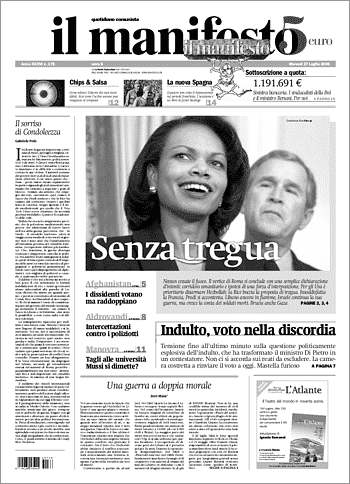
Italian left wing daily newspaper Il Manifesto is making an urgent appeal for funds.

Of course we are all used to left wing publications making financial appeals, but this occasion is different. Il Manifesto is an internationally important institution, and it is under threat of closure.

Il Manifesto has survived for more than 35 years as a workers’ co-operative, without the interference of a capitalist proprietor, and has consistently produced first class journalism.
Although originally supportive of the Communist Party, Il Manifesto has always been independent of party control, and in more recent years has supported the social movement, and Rifondazione Comunista.

It is a witty and innovative paper, combining investigative reporting with satire and cheeky disrespect for the rich and powerful. Nor does Il Manifesto rely on third hand reportage for international events: rivalling its pro-establishment competitors it has journalists around the world. One of its reporters, Giuliana Sgrena, was kidnapped in Iraq by insurgents in February 2005, but thankfully later released.

Il Manifesto is now in danger of closing, since February they have been struggling to pay their own salaries.

On the basis of an annual turnover of 17.5 million Euros, and a staff of 121, the Italian State subsidies cover 25% of costs. The rest of the paper’s income comes from sales. They sell an average 29000 copies of the paper every day, and have 5,892 subscriptions.

Il Manifesto has suffered because of loss of sales due to on-line publishing, and also a steep rise in costs – which rose by 11% in 2005.

Please send a contribution today with your credit card.

Let us ensues that Il Manifesto, and its experiment in defying the laws of the market, survives. The paper has played a vital role in Italy and internationally. It has supported the development of the Italian left away from sectarianism of the past, and towards the collaborative way of working of Rifondazione, and the social forums.

Wednesday, July 26, 2006

Migrant workers in Lebanon

Thanks to the African blogger, black looks, for pointing out the plight of the tens of thousands of “African and South Asian migrants amongst the displaced in Lebanon. Unlike other foreign nationals from the Middle East and the West, who have been evacuated by their respective governments, this group have largely been left to fend for themselves without money or papers. Many of them at the lowest strata of society and in a foreign land. It is estimated that there are some 20,000 Ethiopians as well as Nigerians, Ghanaians, Sudanese, Somalis, Sri Lankans and the largest group (90,000) Filipinos working in domestic servitude, as migrant or forced labour and the sex industry in Lebanon.”

Some but not all of these migrants workers are part of an international industry in people trafficking. As I have pointed out
before there are some 12.3 million slaves in the world today. As Black Looks describes it: “In Africa as elsewhere in the South, the majority poor and dispossessed subsidise the lifestyle of the minority world enabled by a system of dehumanization based on cultural, religious, ethnic and racial difference. Psychologically it is easier to oppress someone who is regarded as different and with whom you can distance yourself. In this way, Nigerian children are taking to Senegal to work in domestic servitude and Senegalese children are taken to Ghana. One ethnic group becomes forced labour or sexual slaves for another in a tit for tat series of exchanges that encompasses the whole world. Going outside one’s own community also makes it more difficult for those trafficked to escape. The further you take someone away from their home the more difficult it is for them to find their way back - trapped in distance, language, culture, bonded-debt and in the case of Lebanon abandoned in a war zone thousands of miles from home.”

Tuesday, July 25, 2006

Ted Grant's funeral


Here are the details of Ted Grant's funeral arrangements - please circulate as best you can:

It will take place at the South Essex (Corbett's Tey) crematorium in Ockenden road, Upminster RM14 2UY on Tuesday 8th August at 1.15pm. It can be reached by public transport from Upminster Station (Tube/Overground)by getting the 370 bus going to Gray's or Corbett's Tey.

A memorial meeting will take place on Sat afternoom 9th Sept at the friends meeting place, Euston London - more details later.

Friday, July 21, 2006

TUC win 'Pole Tax'reform for Polish workers over-paying tax

The TUC today (Thursday) welcomed a major victory for Polish workers in Britain who have been paying double tax on their earnings. A campaign by the TUC South West region has led to a treaty being signed today between the Polish and UK Governments that will make sure Polish workers do not pay both tax in the UK and high level tax on the same earnings when they return to Poland. Thanks to this treaty, UK tax paid will count against Polish tax.

TUC General Secretary Brendan Barber is visiting the Polish church in Bristol today where the problem was first raised with the TUC by the Polish support group, Polski Bristol. The South West TUC took up the campaign with Dawn Primarolo, Bristol South MP and Paymaster General, highlighting to the Minister the complicated tax rules and the fact that workers in other countries such as Ireland get better tax treatment. The Government has subsequently reached an agreement that will benefit thousands of Polish workers employed in the UK. Dawn Primorolo has signed the treaty today on behalf of the British Government.

Speaking at the Polish church in Bristol this evening, Brendan Barber will say: 'Unions, campaigners and community groups in Bristol have worked together to secure an important victory for thousands of Polish workers across the whole country and end this unjust 'Pole tax'.

The Government rightly recognises the value that Polish workers add to the UK economy and has responded quickly to union concerns that they were not being treated fairly.'
Julia Verne , Polski Bristol, said: 'This is great news for Polish workers who have been penalised with unfair tax demands when they go home. The current double tax system doesn't take into account the high cost of living in the UK and is especially punitive to workers on low pay. The system means that workers are left with very little disposable income. When we first raised this issue, the church was packed with workers who wanted to know why they faced double tax. This treaty is great news and we are indebted to the TUC for helping us tackle this issue.'

Nigel Costley, South West TUC Regional Secretary, said:'Unions are giving on-the-ground support to Polish workers to make sure they are treated properly at work but we've proved we can also tackle bigger problems. I didn't realise that they had to pay double tax and was pleased to help them campaign for reform. Dawn Primarolo has been very quick to respond to this issue and make the system fairer for workers in her own constituency and across the country.'

Thursday, July 20, 2006

Stop this destructive war! Workers on all sides are paying the price!

A statement by the Workers Advice Center in Israel in relation to Israel's attack on Lebanon.

Since July 12, Israel has been carrying out a disproportionate and murderous war in Lebanon . It has killed hundreds of innocent civilians, including whole families. It has destroyed much of the infrastructure in the south, creating a humanitarian disaster. Those who suffer most are the workers and the poor. At the same time, the IDF continues to pummel Gaza , here too killing innocent civilians. The goal behind all this destruction is to restore the country's power of deterrence. It needs this power so that it can continue to behave unilaterally––without concessions to the Palestinians or the Syrians.

But Israel too, in the present war, has suffered civilian casualties, both dead and wounded, among the half million or more who live in the Jewish and Arab localities of the north.
The working classes on all sides in the conflict have nothing to gain from this war, no matter what its outcome.

Concerning the Palestinian and Lebanese militias, WAC, which represents the progressive Arab and Jewish workers in Israel , sees no justification for their military actions, which they undertook without consulting their peoples, and which gave Israel a much-desired pretext for showing off its might while exploiting divisions within the Arab camp.

We are concerned about the passive way in which the international community accepts the IDF's exaggerated use of force. We call on political parties and workers' organizations, including the trade unions of the world, to demand a cease fire and the withdrawal of Israeli forces back to the international border.

Israel justifies its massive destruction by claiming that it was attacked first. But if it were truly interested in peace, it could have reached a treaty years ago with Syria , with Lebanon , and, most importantly, with the Palestinian people. All it would have needed to do would have been to withdraw from the areas it conquered in 1967 and recognize the legitimate rights of those peoples.

Without such a comprehensive Israeli withdrawal, there will be neither peace nor stability.
It is time to stop the fighting and begin negotiations on the basis of principles that will guarantee the independence and development of all the peoples in the region.

Visit www.workersadvicecenter.org

Wednesday, July 19, 2006

"It is shameful Tommy, it is shameful"


Sadly the Scottish Socialist Party has suffered very serious damage during the Sheridan libel trial, vindicating the views of those who opposed the issue being brought to court.

Today Tommy Sheridan accused party secretary Allan Green of lying during cross exaination, and Sheridan claimed that the minutes of the executive committee meeting on 9th November 2004 were forged. These are the minutes that Allan McCombes went to gaol earlier this year to keep out of the courts.

Transcript from the BBC:

Mr Sheridan said: "I put it to you the so-called minute is as genuine as a 10 bob note, isn't it?"
"No Tommy, you know it is true," said Mr Green.
Mr Green said: "For you to turn round and accuse the likes of myself of monstrous frame-ups, for any other socialist, never mind one of your standing, it is an appalling thing to do.
"I can hardly believe you are doing this.
"You know that like yourself I have spent a lifetime - my entire adult life - to build up the socialist movement.
"I always carried out to the best of my ability what the party has asked me to do."
He added: "You can lie, accuse me of monstrous frame-ups, none of it the truth. For you to turn round and accuse me of monstrous frame-ups it is shameful Tommy, it is shameful."


Personally I have been very reluctant to draw any judgement about the whole issue, as it is a question for the Scottish comrades to resolve among themselves.

Whatever happens it does not weaken the case for a broad socialist party in Scotland, or the case for an independent, socialist Scotland. Tommy Sheridan and also those he is now accusing of a rather implausible conspiracy against him, have all spent the best parts of their lives, and I’m sure their proudest moments building the SSP.

It is tragic to see those hopes now flapping in the wind due to an egotistical and ill considered court room soap opera. The SSP still represents the best of Scotland, and the example they gave us of left unity, though never perfect, still represents the best traditions of socialist cooperation and solidarity. Whatever happens the comrades in the SSP deserve respect for what they have already accomplished, they deserve solidarity during their current difficulties, and the comrades can count on our continued friendship and support.